Donald Trump has launched “Project Freedom,” a U.S. effort to guide commercial ships through the Strait of Hormuz amid rising tensions with Iran and renewed fears over one of the world’s most important shipping chokepoints. The move has been framed by the White House as a security and humanitarian response, but Tehran has warned that any foreign military interference in the waterway would be treated as a hostile act.
Trump’s Hormuz plan
According to reporting from multiple outlets, Trump announced that the United States would begin helping commercial vessels move out of, and through, the Strait of Hormuz after several countries requested assistance for ships that were effectively stranded in the area. Trump said the operation, called “Project Freedom,” would begin on Monday morning in Middle East time and that Washington would use its “best efforts” to get ships and crews safely through the waterway.
The initiative appears to involve U.S. naval assets and a broader maritime support operation, though reporting differs slightly on whether the mission should be described as an escort, a guided passage, or a protective transit operation. What is clear is that the United States is positioning itself as an active guarantor of shipping security in the strait at a moment when traffic has been disrupted by conflict and retaliatory military action.
Why the Strait matters
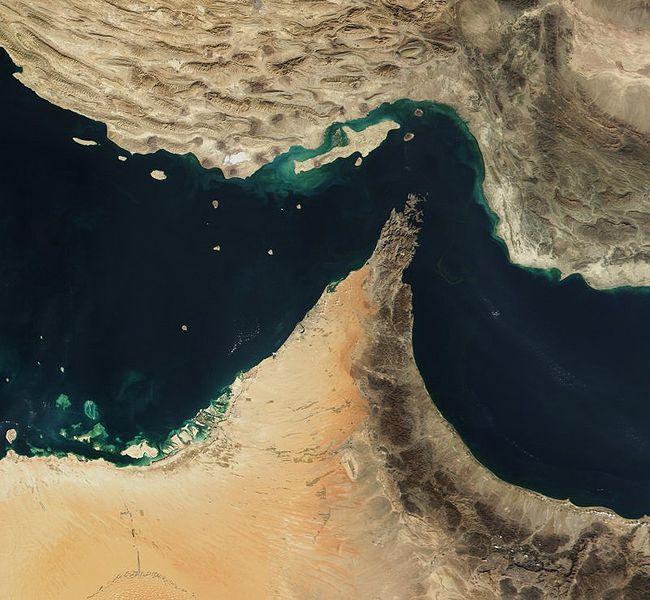
The Strait of Hormuz is one of the most strategically significant waterways in the world because a large share of global oil and gas shipments passes through it. Any interruption there has immediate implications for energy prices, shipping costs, insurance premiums, and regional stability.
That is why Trump’s announcement triggered such close attention from markets and governments alike. The waterway has become a pressure point in the broader U.S.-Iran confrontation, with the latest move adding another layer of uncertainty to an already volatile situation.
Iran’s warning
Iran responded sharply, warning that any American military presence in or near the Strait of Hormuz would be treated as a breach of the ceasefire or as direct interference. Iranian officials have argued that the security of the strait should be coordinated with Tehran’s armed forces, not imposed by outside powers.
The warning is important because it shows how easily a maritime protection plan can be interpreted as escalation. If U.S. ships are seen as enforcing freedom of navigation rather than merely assisting transit, the operation could become part of the conflict rather than a buffer against it.
What Trump said
Trump presented Project Freedom as a response to requests from countries whose vessels were stuck in the strait and could not move safely. He said the ships belonged to nations “from all over the world” that were not involved in the Middle East conflict and described them as innocent parties caught in the crossfire.
He also suggested that the operation would not be open-ended. Once the area is safe for navigation, the ships would not need to remain under this special arrangement. That language has led some observers to treat the mission as a temporary security measure rather than a permanent naval deployment.
How the operation is being framed
The reporting shows two competing narratives. The White House and allied media present Project Freedom as a practical effort to reopen a commercial shipping lane and protect neutral vessels. Critics, including some commentators and Iranian officials, see it as a military move that could deepen the crisis and violate the fragile ceasefire.
That split matters because the legitimacy of the operation may depend less on what it does mechanically and more on how it is perceived politically. In a region where symbolic moves can rapidly become military ones, even a limited ship-guidance mission can be read as a signal of U.S. willingness to confront Iran directly.
Market and security fallout
Markets have already begun to react to the risk surrounding the strait. Oil traders, shipping firms, and insurers are watching for signs that the conflict could affect transit times or push more vessels away from the route altogether. Even the announcement of a protection mission has not eliminated fears of disruption, because any military encounter near the strait could worsen volatility.
At the same time, the situation has underscored how much the U.S. relies on maritime access in the Gulf. The strait is not only a global trade channel; it is also a strategic corridor for American military logistics and regional influence.
Humanitarian language, hard power reality
One of the more striking aspects of Trump’s announcement is the language used to justify it. The president described the effort as helping innocent ships and crews move safely through a dangerous zone, which casts the plan in humanitarian terms. But the deployment of naval assets, personnel, and potentially large-scale support infrastructure suggests a much harder edge.
That contrast has led to criticism from commentators who see the move as classic Trumpian politics: a peace-and-order message backed by the threat of overwhelming force. In practical terms, that means the success or failure of Project Freedom will depend on whether it can reduce risk without provoking a direct Iranian response.
What happens next
The next phase will be whether the ships actually pass safely and whether Iran follows through on its warnings. If the operation succeeds quietly, Trump may claim a maritime-security win and argue that the U.S. restored order to a crucial trade lane. If there is a clash, the initiative could become a flashpoint in a broader confrontation.
For now, Project Freedom stands as a high-stakes test of force, diplomacy, and deterrence in one of the world’s most dangerous waterways. Whether it ultimately calms the Strait of Hormuz or inflames it further will depend on how both Washington and Tehran choose to act in the days ahead.