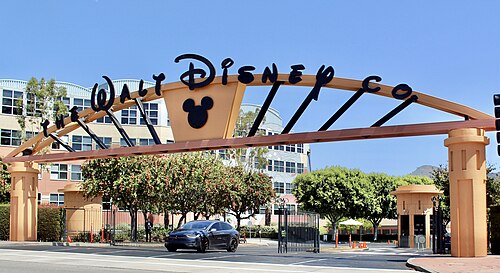
Walt Disney Co. is cutting approximately 1,000 jobs in its first major restructuring round under new chief executive Josh D’Amaro, a move that has reignited the long‑running debate about how much AI is reshaping media, marketing, and entertainment work. The layoffs, which began this week, primarily affect Disney’s marketing and brand functions, but also touch TV, film, digital, and related corporate groups.
For many employees and industry watchers, the timing feels telling: a global media giant streamlining roles at the same moment that generative AI is starting to automate script‑drafting, storyboard‑assistance, ad‑copywriting, and customer‑service tasks. The result is a familiar, uncomfortable conversation: is AI genuinely taking jobs, or is it just another scapegoat while companies cut costs and restructure regardless?
Who is being laid off at Disney?
According to multiple reports, Disney plans to eliminate roughly 1,000 positions, a figure that represents a small fraction of its roughly 231,000‑person global workforce at the end of fiscal 2025. The cuts are heavily concentrated in the company’s recently consolidated marketing and brand division, which has been merged into a single, centralised marketing organisation under new chief marketing and brand officer Asad Ayaz.
Beyond marketing, the workforce reductions are also affecting parts of Disney’s TV, film, and digital operations, including some roles in ESPN, product and technology, and corporate functions. In a memo to employees, D’Amaro said the company is “eliminating roles in some parts of the company” as part of an effort to stream‑line operations and build a “more agile and technologically‑enabled workforce” for the future.
This is not Disney’s first round of layoffs. The company has cut more than 8,000 jobs since 2023, including earlier waves in the metaverse and tech‑forward units, but the 2026 round is widely seen as the first defining move of D’Amaro’s tenure as CEO.
What Disney is saying about the layoffs
Publicly, Disney is framing the 1,000‑job cuts as a streamlining move driven by cost‑pressure and shifting consumer habits, rather than a blunt “AI is replacing humans” story. Streaming‑era economics—lower margins than traditional TV, rising competition from big tech, and the need to consolidate overlapping teams—are explicitly cited as reasons for the restructuring.
In his internal memo, D’Amaro wrote that the company is trying to “serve consumers in an even more connected way” by unifying its marketing and brand teams and reducing complexity. Marketing lead Asad Ayaz added that the redesign aims to “unlock innovation, reduce complexity, and build critical capabilities,” which, in plain language, means fewer people doing similar work and a tighter, more centralised structure.
Employees are being offered severance packages, COBRA coverage, and outplacement support, but the optics are still stark: a new CEO, a new organisational model, and a long list of “duplicate” roles suddenly gone.
Where AI fits into the conversation
On the surface, Disney’s own statements are careful not to say “AI is taking these jobs.” But the broader context makes it hard to talk about the cuts without bringing AI into the discussion. In late 2025, Disney announced a $1 billion collaborative deal with OpenAI, letting its creative teams experiment with AI tools that can generate text, images, and eventually short‑form video using Disney IP.
At the same time, senior executives and investors have openly discussed how generative AI could automate parts of script revision, visual‑effects workflows, and marketing‑copy production, often in ways that reduce the need for large, repetitive‑task teams. For employees, that translates into a sense that AI is not just a “future threat” but an active part of the current restructuring conversation, even if the company’s official reasoning is framed in broader business‑strategy language.
Analysts note that streaming profits, box‑office volatility, and competition from platforms like Amazon and YouTube are real, structural reasons for cost cuts, but AI is acting as an accelerant: it gives Disney (and similar companies) the tools to do more with fewer people, whether that means smaller marketing teams, leaner creative departments, or fewer customer‑support roles.
“Is AI taking our jobs?”: What the evidence suggests
The Disney layoffs sit inside a wider global pattern. Tech and media firms such as Snap, Meta, and others have cited AI‑driven automation as a direct reason for job reductions, openly saying that AI tools can handle work that previously required human teams. In contrast, Disney’s messaging is more cautious, attributing the cuts mainly to operational streamlining and cost‑pressure, which creates a subtle tension between what companies say and how employees feel.
Economists and labour‑market researchers point out that AI is rarely the only driver of layoffs. Instead, it compounds existing pressures—like inflation, debt, streaming‑margin squeeze, and competition—for companies to cut roles and re‑design workflows. The important question, they argue, is not just “is AI taking jobs?” but “is AI reshaping which jobs are safe and what skills are valuable?”
In practice, this often means:
-
Routine, repetitive tasks—ad‑copy drafting, basic editing, customer‑service queries—are more exposed.
-
High‑craft creative and strategic roles—script‑editing, show‑running, brand‑strategy, relationship‑management—remain in demand, but now with an expectation of AI‑tool fluency.
From that angle, the Disney cuts look less like a pure AI takeover and more like a forced adaptation: the company still needs creative talent, but it may need fewer people doing purely administrative or volume‑driven tasks that AI can now partially support.
What this means for workers in media and entertainment
For Hollywood writers, editors, marketers, and production staff, the Disney layoffs are a reminder that the same forces reshaping tech companies are now reaching media and entertainment. If a legacy studio like Disney is cutting 1,000 jobs under a new CEO, younger or mid‑career workers cannot assume their roles are insulated from similar pressures elsewhere.
What seems to be emerging is a new “AI‑adjacent” skill set. Employees who can:
-
Use AI tools without losing a human‑creative touch,
-
Understand data‑driven marketing and analytics,
-
Collaborate across platforms and markets,
are increasingly positioned as more resilient than those whose value is tied to manual, repeatable tasks. For Disney, this means a workforce that is, in D’Amaro’s words, “more agile and technologically‑enabled”—a phrase that quietly signals that comfort with AI and digital tools is no longer optional.
The bigger question: How do companies talk about AI and jobs?
The Disney case also highlights a growing challenge for corporate leadership: how to be honest about AI’s impact without panicking employees or inviting backlash. When a CEO says the company is becoming “more agile and technologically‑enabled,” it often means the same things as: fewer roles, more automation, and higher expectations for every remaining employee.
If AI continues to advance at its current pace, companies may need to move beyond vague “streamlining” language and into clearer conversations about:
-
Which jobs are likely to change?
-
Which tools will be provided, and
-
How employees will be re‑trained or supported through transitions.
Disney’s 1,000‑job cuts are a microcosm of that broader debate. They are not only about AI, but they are happening in a moment when AI is forcing the question: “Is AI taking our jobs, or is it reshaping what it means to do our jobs?” The answer, in the case of Disney and many other companies, is increasingly: a bit of both.