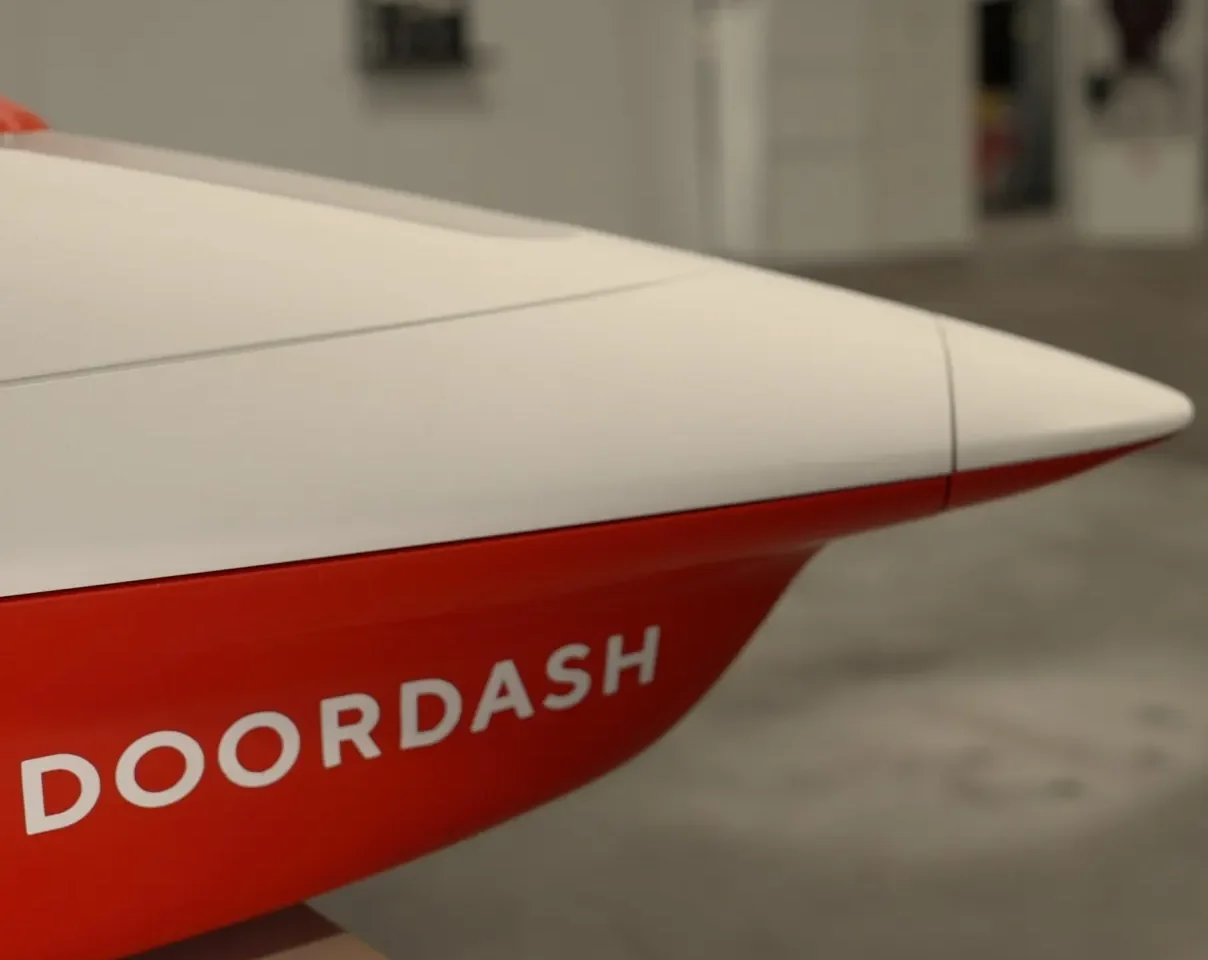
DoorDash has launched an in‑house drone delivery program, DoorDash Air, after securing a Part 135 air carrier certificate from the U.S. Federal Aviation Administration (FAA), a regulatory milestone that authorizes the company to operate commercial drone deliveries as an air carrier in the United States. The move shifts DoorDash from relying solely on partners such as Wing and Flytrex to developing its own aircraft, ground infrastructure and software stack, which will eventually sit inside the same app that powers its core food and grocery delivery marketplace.
FAA Part 135 Certification and Regulatory Context
Part 135 certification is the framework the FAA uses to approve air carriers for non‑scheduled commercial operations, including drone airlines, and involves a multi‑stage review of aircraft airworthiness, maintenance programs, safety procedures and operating manuals. DoorDash says it is now the eighth drone operator in the U.S. to earn this certificate, joining companies like Alphabet’s Wing, Zipline, UPS Flight Forward and Amazon’s Prime Air in the small group cleared to run commercial drone services.
Industry coverage notes that Part 135 status is a prerequisite for scaling beyond small visual‑line‑of‑sight pilots and, in combination with additional FAA approvals, enables beyond‑visual‑line‑of‑sight (BVLOS) flights that make wider routing and scheduling possible. Insider finance and logistics reports explicitly state that DoorDash’s certification “authorizes commercial BVLOS drone flights,” although the FAA has not published full BVLOS technical details for DoorDash publicly, underscoring that the program will still develop under regulatory oversight.
What DoorDash Air Is Building
DoorDash Air is being developed inside DoorDash Labs, the company’s robotics and autonomy unit, which previously created Dot, a 350‑pound autonomous sidewalk delivery robot now operating in suburbs around Phoenix, Arizona, and in Fremont, California. The company says it is designing and building a purpose‑built aircraft tailored to gaps it sees in local commerce, with most components made in the U.S., complementing the short‑ and long‑range drones used by partners like Wing and Flytrex.
Harrison Shih, Head of DoorDash Air, describes the effort as “full stack,” covering ground infrastructure, the drone itself and the handoff systems that make everything work together at drive‑throughs, rooftops and merchant back doors. In TechCrunch’s reporting, DoorDash emphasizes that physical hardware is only one layer; the harder problem is the operating system that decides in real time whether a delivery should be dispatched to a human Dasher, Dot, or a drone.
Integration With DoorDash’s Autonomous Delivery Platform
DoorDash Air runs on top of the company’s Autonomous Delivery Platform, a software layer DoorDash says already coordinates Dot, human Dashers and autonomous partners on a single network. Co‑founder and chief product officer Stanley Tang has framed the work as solving a coordination problem: matching each order with the mode of delivery that can fulfil it fastest and most efficiently, given distance, payload, merchant layout and driver availability.
The platform is designed to dispatch a short‑distance burrito order to a Dasher, route a mid‑range grocery trip to a drone, or send Dot to handle a nearby single‑item order, while handling real‑time inventory reconciliation and handoff logistics for merchants. Tang argues that, unlike autonomy firms focused on a single modality, DoorDash is working across hardware, embedded systems, routing algorithms and marketplace integration simultaneously, a pitch he has used to recruit engineers and autonomy specialists.
Performance Metrics: Sub‑25‑Minute, Mid‑Range Deliveries
DoorDash says its drone pilots have already demonstrated average delivery times of about 25 minutes in 2025, and that drone deliveries under roughly five miles can typically be completed in less than 25 minutes. Internal data cited in DoorDash’s blog post show that more than 20% of DoorDash orders in 2025 travelled three to five miles, but those trips took about 25% longer on average than shorter deliveries, largely because assigning a Dasher to mid‑range routes is more complex.
Routing these mid‑range trips to drones allows Dashers to stay closer to high‑density merchant clusters, focus on the shorter deliveries they frequently prefer, and maximize earnings by reducing dead‑time between orders. In pilots with partner drones, some merchant locations saw DoorDash order volume grow by around 30%, with the lift sustained across nine weeks after launch, suggesting that faster aerial options can drive incremental demand rather than merely substituting human‑delivered orders.
Relationship With Wing, Flytrex and Other Partners
DoorDash is not abandoning its partnerships with existing drone operators; rather, it is adding DoorDash Air on top of those relationships. The company partnered with Alphabet’s Wing in 2022 for a drone program in Australia and expanded that partnership to U.S. cities such as Dallas–Fort Worth in 2024, while also working with Israeli start‑up Flytrex on select routes.
Reuters and Axios report that those deals will remain in place, even as DoorDash develops its own custom aircraft and manages more of its air operations directly. Aviation trade coverage adds that DoorDash has also partnered with European operator Manna in some markets, indicating a hybrid model where DoorDash both operates its own airline and plugs into third‑party carriers to extend reach.
Consumer Use Cases and Help‑Center Guidance
DoorDash’s consumer help documentation frames drone delivery as best suited to small, time‑sensitive orders, such as cold medicine, coffee or hot meals for medical staff finishing long shifts. The help pages explain that users in eligible neighborhoods can select drone delivery for certain items, subject to weight limits, weather conditions and landing‑site availability, with orders typically dropped at designated safe zones rather than directly at an apartment door.
DoorDash has completed “tens of thousands” of drone deliveries to date through partner programs, giving it operational data on customer satisfaction, error rates and neighborhood tolerance before scaling its own fleet. A Vanderbilt University survey of U.S. adults cited by Yahoo Finance found that nearly 70% of respondents were concerned that more drones in their neighborhood could compromise safety, highlighting that consumer trust remains a key constraint even as performance metrics improve.
Strategy: One Network, Many Delivery Modes
DoorDash’s stated strategy is to treat drones as one mode within a multi‑modal network that includes Dashers, sidewalk robots and autonomous vehicles, rather than as a replacement for human couriers. Dashers still handle the vast majority of DoorDash’s millions of daily deliveries, particularly complex orders such as multi‑bag grocery runs, building navigation and bulk catering.
By embedding DoorDash Air into the existing marketplace, the company aims to give merchants access to advanced delivery options without requiring them to build or manage separate infrastructure. DoorDash also points to AI‑driven tools like SmartScale, which helps merchants estimate packaging weight and suitability for drone delivery, as part of a broader push to make sophisticated logistics capabilities available to small businesses.
Competitive and Industry Implications
DoorDash’s launch of DoorDash Air adds another large player to a growing field of drone‑delivery operators that already includes Amazon’s Prime Air, Wing and Zipline, all of which have expanded commercial operations in recent years. The Wall Street Journal notes that DoorDash’s decision to build its own drones, rather than relying solely on partners, reflects a desire to control more of the logistics stack and differentiate its offering in a crowded food‑delivery market.
Logistics and aviation analysts say the move could alter the competitive landscape for mid‑range deliveries, where drone routing can reduce labor costs and reach customers in harder‑to‑staff or more remote neighborhoods. At the same time, the program’s forward‑looking nature—DoorDash itself warns that all statements about rollout, performance and benefits are subject to risks and uncertainties—underscores that the economic viability and regulatory trajectory of large‑scale drone networks remain evolving.
Timeline and Next Steps
DoorDash has not published a detailed, market‑by‑market rollout plan, but spokespersons and investor coverage say the company expects to begin in‑house commercial drone deliveries in fall 2026, with more details to be shared at its annual product event in September. Early operations are likely to start as limited pilots in select regions, focusing on short trips and gradually extending to BVLOS routes as FAA approvals and operational experience accumulate.
DoorDash Labs is hiring across robotics, autonomy, hardware and operations to support DoorDash Air and the broader autonomous delivery roadmap, signalling that the company sees drone delivery not as an experiment but as a long‑term component of its logistics network. As regulators, communities and merchants watch closely, DoorDash Air will test whether in‑house drones can meaningfully improve speed, reliability and economics in local delivery—without undermining safety or public trust.