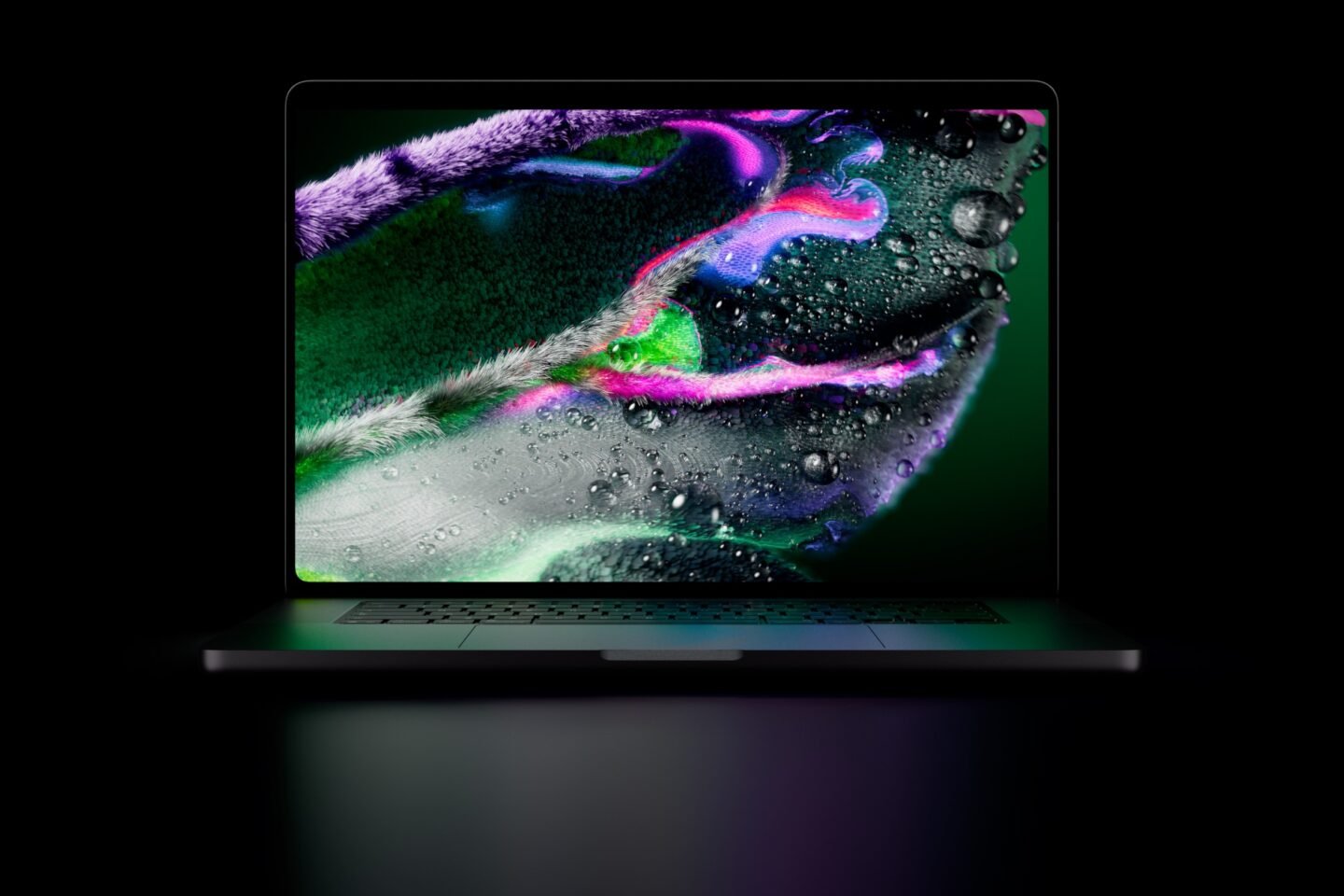
Apple has launched its first touchscreen MacBook Pro, marking a major reversal of the company’s long-standing opposition to touch-enabled laptops. The new MacBook Pro with ProLED XDR Display combines a tandem OLED screen, Touch input, M5 Pro and M5 Max chips, and a thinner, lighter design, with pre-orders opening on October 28 and sales beginning November 6.
Touch Arrives on Mac for the First Time
The biggest change is that Touch has arrived on the Mac for the first time. Apple said the touch sensor is built directly into the display panel rather than layered on top of it, reducing latency and making interactions feel more immediate.
Users can swipe through webpages, pinch to zoom, drag files, double-tap windows and use the screen as a drawing canvas. Apple said the feature is designed to complement—not replace—the keyboard and trackpad, with macOS translating touches into clicks for many existing apps.
The move reverses a position Apple had maintained for years. CEO John Ternus said in 2021 that the Mac was optimised for indirect input and that Apple had not felt a reason to change that approach; at the launch, he said, “for the very first time, we are bringing touch to the Mac.”
ProLED XDR Display: Tandem OLED Technology
The new MacBook Pro introduces Apple’s ProLED XDR Display, built on tandem OLED technology with two self-illuminating pixel layers. Apple says the design delivers deeper blacks, brighter highlights and improved brightness uniformity while reducing internal reflections common in traditional OLED panels.
The display offers up to 2,000 nits of peak HDR and SDR brightness, a 10,000,000:1 contrast ratio, a 120Hz variable refresh rate and support for both P3 and Adobe RGB colour spaces. Apple says the screen provides more than 80% Rec. 2020 coverage for HDR video editing and colour grading.
A nano-texture glass option is available to further reduce glare and reflections in bright environments.
M5 Pro and M5 Max Performance
The laptops run on Apple’s M5 Pro and M5 Max chips, which the company describes as its most powerful processors built for a pro laptop. They support up to 128GB of unified memory and 16TB of storage.
Apple says the M5 Max is aimed at users working in 3D visual effects, AI development, film scoring and 8K post-production, and can run large language models with hundreds of billions of parameters entirely on device. The chips include a Neural Accelerator in each GPU core, enhanced shader cores and a third-generation ray-tracing engine.
Lighter Design and Longer Battery Life
Apple has also made the new MacBook Pro thinner and lighter. The 14-inch model now weighs 3 pounds, half a pound less than before, while the 16-inch model weighs 4 pounds, 0.7 pounds lighter than its predecessor.
The company claims up to 24 hours of battery life. The redesign is enabled by the more efficient OLED display stack and a new thermal architecture that directs warm air away from the display.
Dynamic Island Comes to MacBook Pro
Apple has brought the Dynamic Island to the Mac for the first time. It serves as a home for Spotlight, Live Activities and Siri AI, allowing users to search the laptop, view real-time updates, accept AirDrop requests or control music from the top of the screen.
The MacBook Pro runs macOS 27, which includes Siri AI, Apple Intelligence features and new Touch-specific system gesture APIs for developers.
MacBook Pro Pricing Reaches a New High
The new models carry a substantial price increase. The 14-inch MacBook Pro with M5 Pro starts at $2,899, while the 16-inch version starts at $3,399. The M5 Max versions start at $4,499 for the 14-inch model and $4,799 for the 16-inch model.
Fully configured models are considerably more expensive. TechCrunch reported that the top-spec 14-inch configuration costs $14,249, while the 16-inch reaches $14,549. Upgrading to 16TB of storage adds $7,000, while 128GB of memory adds $2,000.
The higher pricing comes amid pressure across the PC industry from rising memory costs and weaker demand. CNBC reported that global laptop shipments are expected to fall 11% this year, while Apple’s own shipments declined an estimated 11% in the third quarter.
What the Touchscreen MacBook Pro Means
The launch is significant because it brings Apple’s laptop line closer to the touch-first experience of the iPhone and iPad, while retaining macOS and the Mac’s traditional keyboard-and-trackpad workflow.
For creative professionals, the combination of a high-brightness OLED display, Touch input and M5-series performance could make the MacBook Pro more useful for design, music, video editing and 3D work. But whether Touch becomes a mainstream Mac feature will depend on how developers and users adopt the new interface.apple+1
The MacBook Pro with ProLED XDR Display is available for pre-order now in 30 countries and regions, with customer deliveries and retail availability beginning November 6.