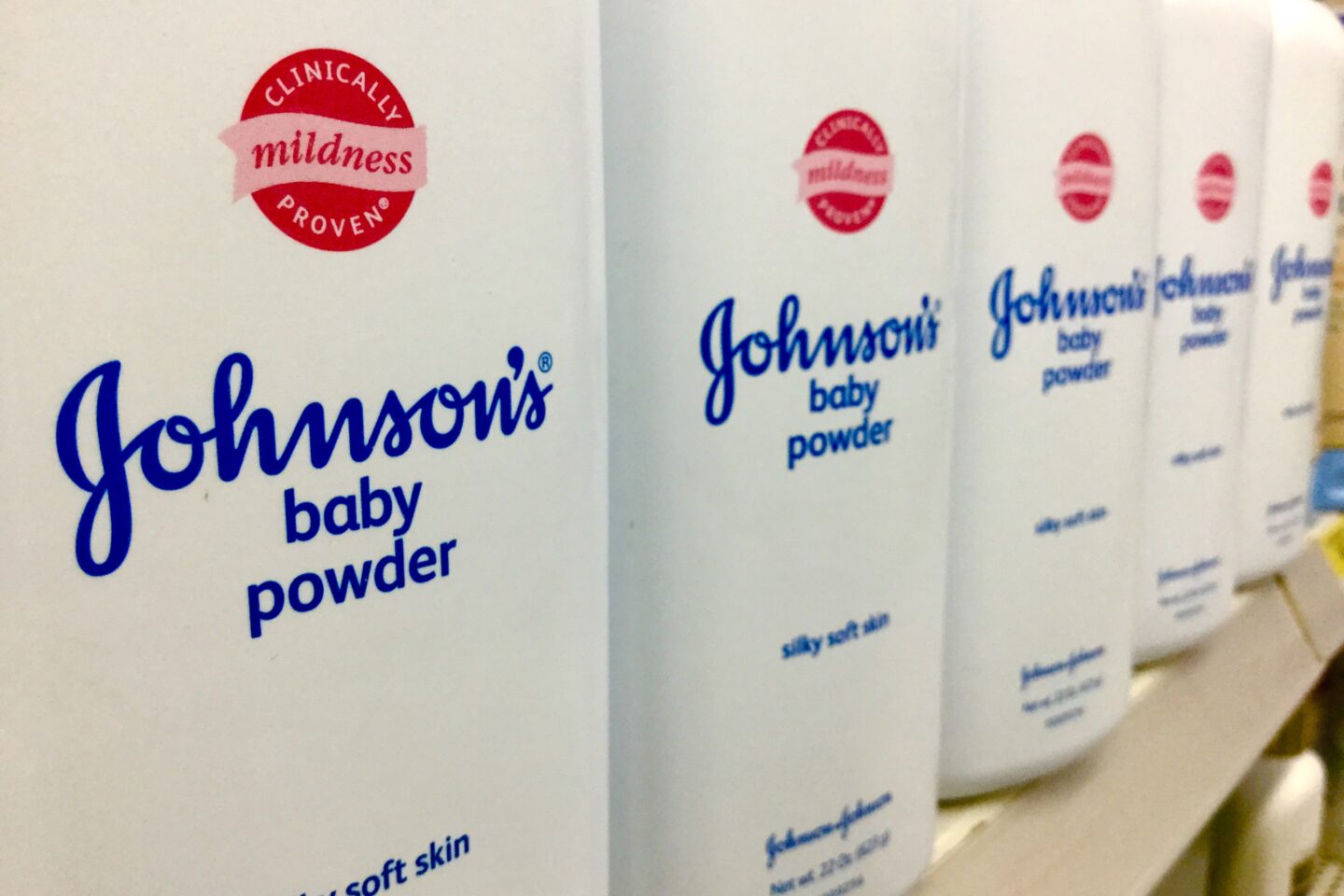
Johnson & Johnson has proposed a settlement of up to $5.5 billion to resolve the vast majority of remaining lawsuits in the United States alleging that its talc‑based baby powder and other products caused ovarian cancer, marking a pivotal moment in mass‑tort litigation that has stretched over more than 15 years. The agreement, announced this week, is structured as a conditional, non‑bankruptcy resolution: it will only take effect if law firms representing at least about 95% of qualifying ovarian‑talc claimants agree to participate.
Scope of the $5.5 Billion Talc Settlement
In its investor announcement, Johnson & Johnson said the proposed deal covers the “remaining talc litigation” in US federal multidistrict litigation (MDL) and related state‑court proceedings, focusing on claims that talc products caused ovarian cancer. Reporting by The Hindu, Al Jazeera and others indicates that the offer is intended to resolve around 69,000–76,000 claims, representing virtually all outstanding ovarian‑talc cases in US courts.
The company describes the $5.5 billion figure as its estimated cost to resolve those claims, not as an absolute cap on total payout. Attorneys involved in the negotiations, including US plaintiffs’ lawyer Chris Seeger, have said the settlement assigns specific values to qualifying claims and that Johnson & Johnson could ultimately pay more than $5.5 billion depending on how many claims meet the criteria.
Conditional Resolution: 95% Participation Requirement
A key feature of the proposed agreement is the high participation threshold: the deal is conditioned on firms representing at least approximately 95% of the remaining ovarian‑talc claimants agreeing to the resolution. If that threshold is not met, Johnson & Johnson has reserved the right to continue litigating individual cases rather than proceed with a global settlement.
This structure distinguishes the proposal from prior efforts to channel talc claims through the bankruptcy of J&J subsidiary LTL Management, which sought court‑approved global deals but faced judicial pushback. Here, J&J is pursuing a negotiated civil settlement outside bankruptcy, framed as a way to “efficiently conclude” the talc litigation while avoiding the cost and uncertainty of thousands of individual trials.
Payment Timeline and Tranches
Johnson & Johnson has said it expects to pay up to $3 billion under the settlement in 2027, with additional payments scheduled for 2028 and beyond. This staggered structure allows the company to spread the financial impact across multiple years, a material consideration for a healthcare conglomerate balancing litigation exposure with investor expectations and capital allocation.
Media reports note that the settlement assigns per‑claim values that vary with injury type, duration of product use and other factors, rather than offering a single flat amount per plaintiff. However, detailed allocation formulas have not yet been published, with both sides emphasising that the agreement is still contingent and subject to court oversight and claimant participation.
J&J’s Position: “Meritless” Claims but Desire for Finality
Throughout the talc litigation saga, Johnson & Johnson has consistently denied that its talc‑based products cause cancer, citing decades of testing and regulatory review. In its latest statement, the company reiterated that “there is no evidence that the company’s talc products caused any particular claimant’s ovarian cancer,” highlighting a recent specific‑causation ruling from the federal MDL court that found plaintiffs could not prove talc caused individual diagnoses under prevailing evidentiary standards.
Erik Haas, J&J’s vice‑president of litigation, has described the claims as “meritless” but said the company is willing to settle to “bring finality to a saga” that has weighed on the firm for years. In parallel, J&J points out that it stopped selling talc‑based baby powder in the US in 2020 and globally in 2023, replacing it with cornstarch‑based formulations, even as it continues to dispute that talc itself poses a cancer risk.
Litigation Background: MDL 2738 and Failed Bankruptcy Deals
Legal actions over J&J’s talc products date back at least to 2009 in the US, expanding into a federal multidistrict litigation (MDL 2738) centered in New Jersey and numerous state‑court proceedings. Over the years, juries have issued a mix of verdicts, including some very large awards—such as a California mesothelioma case where a $966 million verdict was later reduced to $16 million in compensatory damages after punitive damages were vacated.
Johnson & Johnson previously attempted to resolve ovarian‑talc claims through bankruptcy plans involving LTL Management, including a 2024 proposal worth about $6.475 billion to be paid over 25 years, funded by a subsidiary’s Chapter 11 filing. Those efforts were controversial and ultimately rejected by US courts, with judges questioning whether a financially healthy parent company could properly use a subsidiary’s bankruptcy to manage mass tort liabilities.
The new $5.5 billion proposal is framed as a direct settlement rather than a bankruptcy plan, following the collapse of earlier global offers and increased scrutiny of “Texas two‑step” restructuring strategies used by J&J and other firms.
Plaintiffs’ Perspective: “After a Decade of Fighting, Families Win”
Advocacy groups and some plaintiffs’ firms have presented the proposed settlement as a hard‑won outcome after years of litigation, describing it as a measure of justice for families who alleged harm from long‑term talc use. A press statement circulated by plaintiffs’ organisations characterised the settlement as “historic,” emphasising that it would compensate tens of thousands of women and families who say they developed ovarian cancer after using Johnson’s Baby Powder and other talc‑based products.
At the same time, many plaintiffs remain critical of J&J’s continued denial of causation and the lack of public acknowledgement of wrongdoing. Some advocates argue that while the monetary resolution may provide financial relief, it does not substitute for regulatory reforms or clearer warnings that could have prevented harm.
UK and Global Claims: Settlement Excludes Largest UK Case
Crucially, the proposed $5.5 billion settlement explicitly does not cover the United Kingdom, where separate group litigation over talc products is proceeding in the High Court and may become the largest product‑liability case in British history. The UK case, filed in 2025, involves thousands of potential claimants alleging that J&J’s baby powder sold in the UK contained asbestos and caused ovarian cancer, mesothelioma and other illnesses, claims the company also denies.
BBC reporting notes that UK claimants rely heavily on internal J&J and Kenvue documents and historical testing data to argue that the company knew of contamination risks but failed to warn consumers, while J&J and its spun‑off consumer unit maintain that their products “met all regulatory standards, did not contain asbestos, and do not cause cancer.” Because the US settlement does not address these UK claims, J&J and Kenvue still face significant exposure and reputational risk in Europe and other jurisdictions.
Implications for Mass Torts and Corporate Strategy
If approved and widely adopted by claimants, the $5.5 billion US talc settlement would mark one of the largest negotiated resolutions of a consumer‑product cancer mass tort outside a bankruptcy setting. It could provide a template for other companies facing large clusters of product‑liability suits, particularly where courts and regulators have grown wary of using bankruptcy as a primary mass‑tort management tool.
For Johnson & Johnson, the settlement is also a strategic move: it offers a path to reducing litigation uncertainty, stabilising investor sentiment and turning the page on a controversy that has damaged its public image, even as the company doubles down on its assertion that the “science” ultimately supports product safety. For plaintiffs and advocates, the deal represents both vindication of years of legal pressure and a reminder that even very large settlements can leave open questions about corporate accountability and global justice where substantial claims remain outside the scope of the agreement.
Taken together, the proposed $5.5 billion talc settlement does not end the debate over talc and cancer, but it does mark a decisive shift in how Johnson & Johnson is choosing to manage its US ovarian‑cancer exposure—from contested bankruptcy plans to a negotiated, conditional civil resolution with enormous financial and legal consequences.