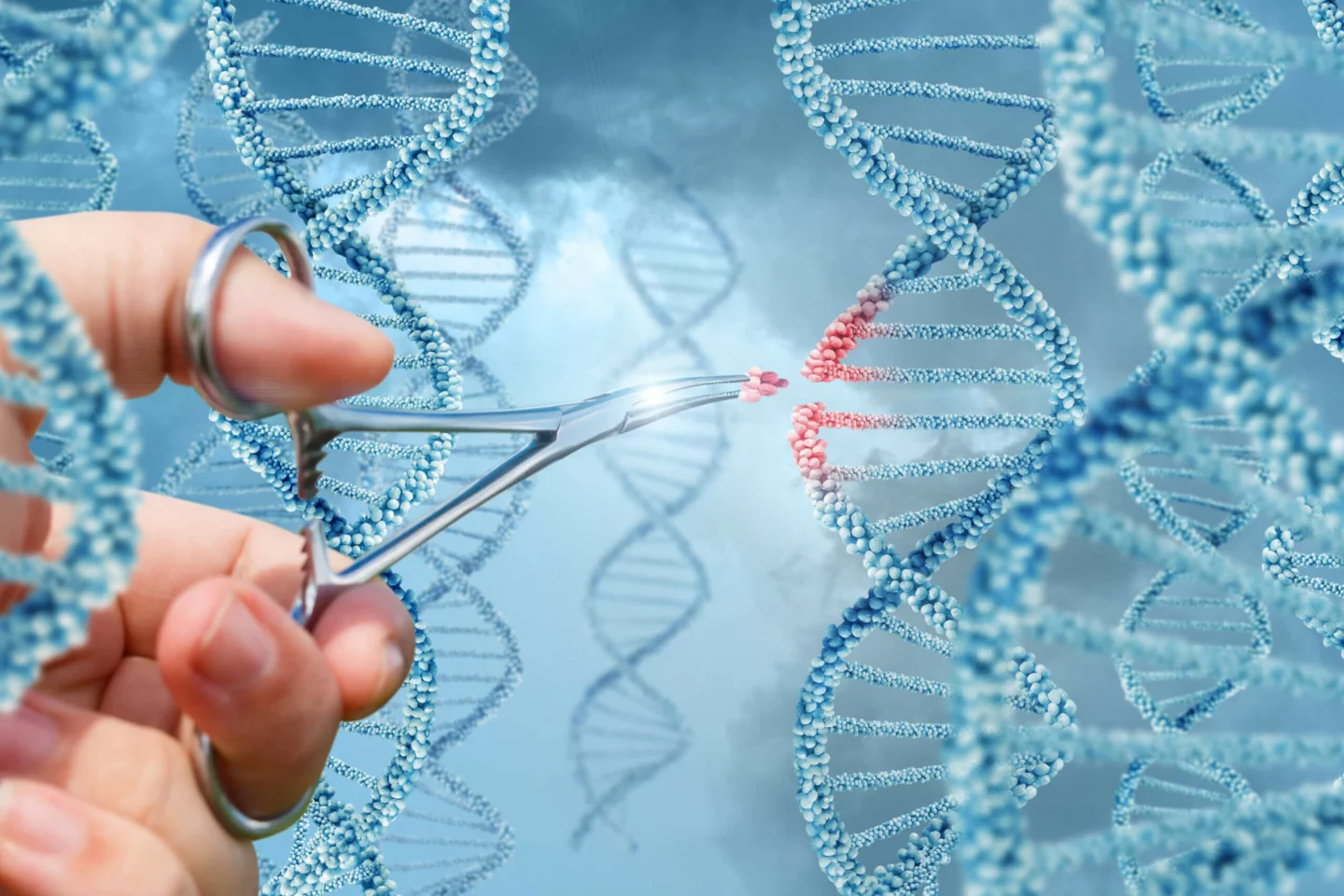
As biotechnology moves from copying life to editing and potentially redesigning it, the question is no longer only what science can achieve, but what the law should allow us to own.
When Dolly the sheep was born in 1996, she demonstrated that an adult somatic cell could be used to produce a genetically near-identical animal through a technique known as somatic cell nuclear transfer (SCNT). The scientific achievement was extraordinary. It also raised a question that has become increasingly relevant as biotechnology advances: if living organisms can be reproduced, modified and engineered, where does scientific invention end and the legal protection of life begin?
Human cloning brings this question into particularly sharp focus. Yet the debate is often confined to bioethics, human dignity and the safety of reproductive technologies. An equally important dimension receives comparatively less attention: the role of intellectual property (IP) in determining who controls the technologies, biological materials and commercial opportunities associated with human cloning.
For an IP practitioner, this is not simply a question of whether a cloned human could be patented. It concerns the patentability of the underlying technology, the ownership of research outputs, the commercialisation of genetic discoveries, and the limits of exclusivity where human life and dignity are implicated.
-
First, what exactly is human cloning?
Human cloning broadly refers to the creation of a genetically near-identical copy of a human organism or genetic material. The legal and ethical analysis, however, depends significantly on the type of cloning involved.
Reproductive cloning seeks to produce a human being genetically related to an existing individual through a cloning technique. In SCNT, the nucleus of a somatic cell is transferred into an egg cell whose nucleus has been removed. The reconstructed cell is stimulated to develop and, in principle, may form an embryo.
Therapeutic or research cloning uses a similar approach to obtain embryonic stem cells or study cellular development, rather than to bring a cloned individual to birth. Its proposed applications include disease modelling, regenerative medicine and research into cellular differentiation.
These categories should not be conflated. A technique used to investigate cellular mechanisms may raise different legal questions from one intended to produce a human being. Neither should be confused with gene editing, which modifies genetic sequences, or with reproductive technologies that do not involve cloning.
This distinction matters for IP because the patentability of a laboratory technique, a cell culture, a culture medium or a genetic modification may be assessed differently from a claim directed to cloning a human being itself.
The legal challenge, therefore, is not to treat biotechnology as one indivisible category, but to examine precisely what is claimed, how the invention operates, and what its intended use entails.
-
Can human cloning technology be patented?
The answer depends on the jurisdiction and the subject matter of the patent claims.
Patent systems generally reward qualifying technical inventions that satisfy requirements such as novelty, inventive step and industrial applicability or utility. However, these requirements do not operate in isolation. Biotechnology is subject to additional exclusions reflecting public policy, morality and the special status of human biological material.
The European Patent Convention provides a particularly clear example. Article 53(a), read with Rule 28(1)(a), excludes patents for processes for cloning human beings. The European Patent Office’s examination guidance defines the exclusion by reference to processes intended to create a human being with the same nuclear genetic information as another living or deceased human being. The provision also separately addresses germline modification and certain uses of human embryos for industrial or commercial purposes.
India approaches the issue through its own statutory framework. Section 3(b) of the Patents Act, 1970 excludes inventions whose primary or intended use or commercial exploitation could be contrary to public order or morality, or which cause serious prejudice to human, animal or plant life or health, or to the environment. Section 3(c), which excludes the mere discovery of a living thing or a substance occurring in nature, may also become relevant depending on the claims.
The Indian Patent Office’s biotechnology examination guidance has also identified human cloning and germline modification among technologies raising public-order and morality concerns.
The important distinction is that an exclusion directed at human cloning does not automatically render every invention associated with cloning or stem-cell research unpatentable. A genuinely inventive laboratory apparatus, cell-culture medium, analytical method or enabling technology may require a separate assessment under the applicable law.
For practitioners, this calls for careful claim construction and a clear understanding of the invention’s intended use. Neither the technical sophistication of a process nor its commercial potential can, by itself, overcome a statutory exclusion.
-
What the case law tells us: three important boundaries
Although the following decisions do not establish a universal legal rule governing human cloning, they offer important guidance on the relationship between biotechnology, patent rights and the public interest.
-
Brüstle v Greenpeace e.V.– the morality boundary
In Oliver Brüstle v Greenpeace e.V., Case C-34/10, decided on 18 October 2011, the Court of Justice of the European Union considered a German patent concerning neural precursor cells derived from human embryonic stem cells and their potential therapeutic applications.
The dispute required the Court to interpret the exclusion concerning the use of human embryos for industrial or commercial purposes under the EU Biotechnology Directive, 98/44/EC. The Court adopted a broad interpretation of the concept of a human embryo for the purposes of that exclusion and held that the relevant exclusion could extend to inventions involving the destruction of human embryos to obtain stem cells.
The significance of Brüstle extends beyond embryonic stem-cell research. It illustrates that patent eligibility can turn on the biological process by which a claimed invention is obtained, not merely on the therapeutic promise of the resulting product.
For patent drafting, this raises a critical question: does the invention necessarily depend on a process that the applicable law excludes, even if the claims are framed around a downstream product?
The decision must, however, be read in its statutory context. It is an EU-law judgment concerning embryo-related exclusions, not a blanket prohibition on all stem-cell inventions or a direct ruling on human cloning.
-
Association for Molecular Pathology v Myriad Genetics -discovering life versus inventing technology
In Association for Molecular Pathology v Myriad Genetics, Inc., 569 U.S. 576 (2013), the United States Supreme Court considered patents relating to the BRCA1 and BRCA2 genes, which are associated with increased risks of breast and ovarian cancer.
The Court held that naturally occurring DNA segments are not patent-eligible merely because they have been isolated from their surrounding genetic material. It distinguished such DNA from complementary DNA (cDNA), which may be patent-eligible because it is not naturally occurring, subject to the applicable legal requirements.
The case was not about cloning. Its relevance lies in the principle underlying the patentability of biological inventions: identifying, isolating, or describing something that already exists in nature is not necessarily the same as inventing it.
Applied to cloning-related research, the question becomes whether the applicant has developed a qualifying technical invention or is effectively seeking exclusive rights over biological material or a natural phenomenon as such.
This distinction is particularly important when evaluating claims relating to genetic sequences, cellular characteristics, naturally occurring biological materials and technologies that manipulate them.
-
Diamond v. Chakrabarty— when human intervention creates patentable subject matter
In Diamond v. Chakrabarty, 447 U.S. 303 (1980), the United States Supreme Court upheld the patent eligibility of a genetically engineered bacterium capable of breaking down components of crude oil.
The Court distinguished a human-made organism with characteristics materially different from those found in nature from a discovery of a natural phenomenon. The decision became a landmark in the development of modern biotechnology patent law.
Read alongside Myriad, Chakrabarty demonstrates that human intervention can be relevant to patent eligibility, but it does not establish that every modified biological entity is patentable.
Nor does it override specific statutory exclusions. A technologically sophisticated process intended to produce a human clone cannot be assumed patentable simply because substantial human ingenuity is involved.
Taken together, these cases expose the central tension: patent law must distinguish genuine technical contributions from discoveries of nature, while respecting express legal limits on the commercial exploitation of human biological material.
-
Beyond patents: who controls the commercial value of cloning research?
The IP implications do not end with the patentability of a cloning process.
Consider a hypothetical biotechnology company developing a platform for cellular reprogramming, embryo development analysis or stem-cell differentiation. Its commercial advantage may lie in a combination of laboratory protocols, specialised equipment, culture formulations, software, datasets and proprietary research methods.
Different parts of that platform may attract different forms of protection.
- Patents: Eligible technical inventions, such as particular instruments, engineered compositions or qualifying processes, subject to statutory exclusions.
- Trade secrets: Confidential protocols, manufacturing parameters and experimental know-how, provided the applicable requirements for trade-secret protection are satisfied.
- Copyright: Original software code, technical documentation and qualifying research materials, without conferring ownership over scientific facts or biological concepts themselves.
- Contracts and licensing: Rights governing access to research materials, datasets, equipment and confidential know-how, subject to applicable law and public-policy restrictions.
This creates an important distinction between owning an invention and owning a human being.
A company may have enforceable rights over a qualifying patented process or proprietary laboratory method. Those rights do not, by themselves, establish ownership of a person produced through a biological process or confer unrestricted control over that person’s genetic identity.
Similarly, a patent over a particular research tool does not automatically confer exclusive rights over every downstream discovery made with it.
The distinction is fundamental to responsible IP strategy: protection should be directed at legitimate technical contributions, not treated as an entitlement to control human life.
-
The next frontier: cloning, gene editing and the creation of “superhumans”
The debate becomes more complex when cloning is considered alongside genome editing and the prospect of heritable genetic modification.
In 2018, Chinese scientist He Jiankui announced the birth of gene-edited twins following an attempt to modify the CCR5 gene. The announcement prompted international criticism and renewed scrutiny of the scientific, ethical, and governance safeguards surrounding heritable genome editing. The case was not an example of human cloning, but it demonstrated how interventions in human biology can outpace accepted scientific and regulatory safeguards.
The IP implications are substantial. Competing research groups may seek patents over gene-editing systems, delivery mechanisms, engineered cellular platforms and related applications. The resulting patent landscape can influence which institutions are able to develop these technologies, the terms on which others may access them and the distribution of commercial benefits.
Yet patent protection and permission to conduct a particular activity are separate legal questions. A patent does not constitute regulatory approval, establish ethical acceptability or displace restrictions imposed by other laws.
Nor does the existence of a patent establish that a technology is safe, effective or appropriate for clinical use.
For technologies affecting future generations, the assessment must extend beyond whether an invention meets the conventional requirements of patent law. It must also consider safety, consent, long-term consequences, equitable access and the interests of individuals who cannot consent to interventions made before their birth.
-
What should IP practitioners take away from this debate?
Human cloning illustrates why biotechnology cannot be approached through a patentability checklist alone.
For practitioners advising innovators, research institutions and investors, at least four questions deserve particular attention:
First, define the invention precisely. Distinguish a prohibited or restricted end use from a potentially patentable enabling technology. Examine the claims, the description, and the intended application rather than relying solely on the terminology used by the applicant.
Second, assess jurisdiction-specific exclusions early. A claim that may be considered in one jurisdiction may be excluded in another. The European framework expressly addresses human cloning, while India’s Section 3(b) and related provisions require a distinct statutory analysis.
Third, develop a layered IP strategy. Where patent protection is available, it may need to be complemented by trade-secret management, contractual controls, licensing provisions, and appropriate research collaborations. Each mechanism has different limits and should be selected according to the nature of the technology.
Fourth, distinguish legal exclusivity from ethical legitimacy. A commercially valuable invention is not necessarily an ethically acceptable one. Equally, ethical concerns should not be used as a substitute for rigorous legal analysis of the actual claims and statutory provisions.
These considerations are not limited to cloning. They are increasingly relevant to synthetic biology, stem-cell platforms, personalised medicine, reproductive technologies and emerging forms of human enhancement.
Conclusion: Can life be an invention?
Human cloning forces us to confront a question that patent law was not originally designed to answer in isolation: how should the law reward technological ingenuity when the subject of that ingenuity is human life itself?
The answer cannot lie in treating every biological discovery as an invention, nor in assuming that every technology associated with human biology must be denied protection. The more defensible approach is to distinguish between legitimate technical innovation and claims that conflict with statutory exclusions, human dignity, or the public interest.
The cases of Brüstle, Myriad and Chakrabarty illustrate different parts of this boundary. Together, they show why biological innovation requires careful attention to the nature of the claimed invention, the method by which it is produced and the legal framework governing its exploitation.
As science moves from copying life to editing it, and potentially to engineering traits that future generations may inherit, the role of IP professionals becomes more consequential. We must understand not only what can be protected, but also what that protection enables, whom it affects, and where its limits should lie.
The real question is not simply whether science can create or recreate life. It is whether our legal frameworks can keep pace with the power to do so—and ensure that the pursuit of innovation does not eclipse the dignity of the human beings at its centre.
#HumanCloning #IntellectualProperty #PatentLaw #Biotechnology #Bioethics #InnovationPolicy