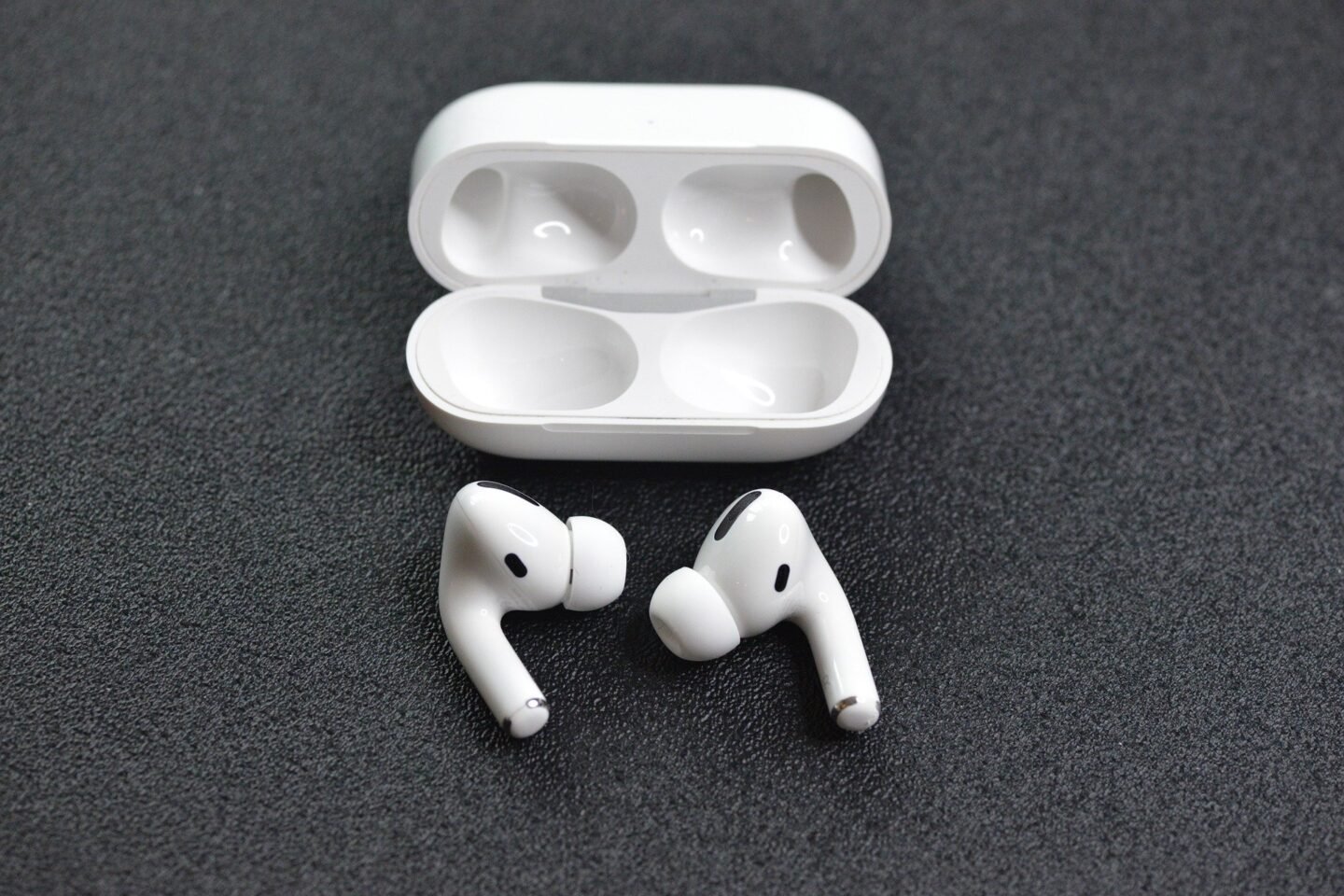
Apple’s long‑rumoured camera‑equipped AirPod Camera have effectively been confirmed by a demo video accidentally bundled with a macOS beta, offering the clearest look yet at how the company plans to merge its hugely popular earbuds with on‑device AI and environmental sensing. But despite speculation that the leak meant an imminent unveiling alongside the iPhone 18 Pro next month, multiple reports now say Apple has pushed the launch to 2027 due to supply‑chain and software challenges.
Leak Shows AirPods Camera and ‘Visual Intelligence’ Working Together
The latest evidence comes from a short demo video discovered in the release candidate of macOS Tahoe 26.7, which clearly shows a person wearing AirPods with an embedded camera as they hold a book up in front of their face. A voice‑over explains: “With Visual Intelligence, your world becomes savable. See something you like? Just ask me to save it for later.”
According to MacRumors’ analysis of the file, the camera built into the AirPods stem sends a live feed to a new Apple feature called Visual Intelligence, which then allows Siri and other AI tools to recognise objects in the wearer’s environment, answer questions about them and store information for future reference. The setup flow in the leaked interface specifically references turning on Visual Intelligence for AirPods, confirming that the earbuds are designed to be a key hardware endpoint for the feature.
The video also includes a usage warning: if the wearer’s hair covers the AirPods, they receive an alert saying, “To get the most accurate information about things in your environment, make sure AirPods are not covered,” underscoring that the device needs a mostly unobstructed field of view.
Two Camera AirPods Prototypes: B790 and B798
The demo unit seen in the leak is believed to correspond to an internal prototype codenamed B790, which Bloomberg’s Mark Gurman has previously described as a modified version of AirPods Pro 3 with additional sensors and AI hardware. A second, more ambitious version called B798 is reportedly under development as a new generation of AirPods Pro with integrated cameras, potentially incorporating more advanced sensors beyond the basic imaging hardware.
Sources cited that Apple had originally placed B790 on its 2026 roadmap, with advanced employee testing taking place in spring 2026, before supply‑chain issues and software integration problems forced the company to push the product back. The demo video in macOS Tahoe is understood to show the B790 hardware.
What the Cameras Actually Do: Context, Not Photography
One of the more striking details in the recent coverage is that the cameras built into these AirPods are not designed to function like smartphone cameras. According to sources briefed on the product:
-
The earbuds will use low‑resolution image sensors that primarily scan the surrounding environment, rather than capturing high‑quality photos or videos.
-
Their main role is to give Siri and Visual Intelligence contextual awareness—for example, reading the title of a book, recognising signs, products or objects, and then answering questions or executing tasks based on what the user is looking at.
In the leaked demo, the use case is straightforward: the user lifts a book, the AirPods camera detects and interprets the cover, and Visual Intelligence offers to save that book for later—a glimpse of how Apple envisages a hands‑free, AI‑layered interaction with the physical world
Part of a Broader AI Wearables Strategy
The AI AirPods are not a one‑off experiment but part of a wider AI wearables roadmap that Apple is pursuing as it looks beyond the iPhone for its next wave of growth. Gurman’s reporting and subsequent coverage indicate that, alongside camera AirPods, Apple is working on:
-
Its first smart glasses with integrated displays and sensors.
-
A neck‑ or shirt‑worn pendant with a camera, designed to act as an AI assistant that sees the user’s environment.
-
Other camera‑based wearables and smart home devices that tie into an upgraded, AI‑enhanced version of Siri.
South Korean outlet The Chosun Ilbo notes that Apple sees embedding cameras and AI into existing, familiar hardware like AirPods as a way to enter the AI wearables race more quickly than designing entirely new product categories from scratch—especially as rivals like Meta, Google and Samsung push their own smart glasses and assistants.
Even without camera AirPods in 2026, incoming CEO John Ternus is expected to debut several new categories over the next 18 months, including a foldable iPhone, a smart home display, a touch‑screen MacBook and updated HomePod and TV hardware, with the AI AirPods lining up as a major pillar of the 2027 portfolio.
Privacy Concerns and the ‘PervertPods’ Nickname
As with any camera‑equipped wearable, privacy concerns surfaced almost immediately after the leak. Social media critics have already dubbed the concept “pervertpods”, reflecting fears that people could be recorded or scanned without their knowledge in gyms, locker rooms, classrooms and other sensitive spaces
Commentary highlighted by MacRumors shows users worrying less about their own privacy as wearers and more about the privacy of everyone around them, who have not consented to being captured by a device that looks like a normal pair of earbuds. Others compare the potential backlash to that faced by Meta’s Ray‑Ban smart glasses, which have drawn criticism and even local bans in some contexts.
Apple is acutely aware of these optics and is working to ensure the product is not stigmatized as “Pervert Pods.” Apple has long leaned on privacy as a core marketing message, positioning itself as stricter than competitors in how it handles data and designs features like on‑device processing.
How that translates into concrete safeguards for AI AirPods—such as visible recording indicators, strict limitations on storage, or on‑device only processing of camera data—remains to be seen and is not detailed in the current leaks.
What to Expect Next
In the near term, the main takeaway for consumers is that camera‑equipped AirPods will not arrive alongside the iPhone 18 Pro in September, contrary to early speculation. Instead:
-
The leaked macOS Tahoe demo confirms Apple is actively testing Visual Intelligence on AirPods, showing how the product is supposed to work once it ships.
-
Supply‑chain and software integration issues mean Apple has shifted the hardware launch to 2027, with both the B790 and the more advanced B798 variants still under development.
-
AI AirPods are set to become one of the first pieces of dedicated AI hardware from Apple, joining smart glasses and other camera‑based wearables in a broader push to embed intelligence into devices that users already wear every day.
Between now and then, Apple will have to do more than polish its algorithms and supply chain. It will also need to persuade regulators and the public that putting always‑on cameras into such ubiquitous accessories can be done in a way that enhances everyday life—by making the world “savable,” as the demo promises—without turning everyone around the wearer into an involuntary data point.