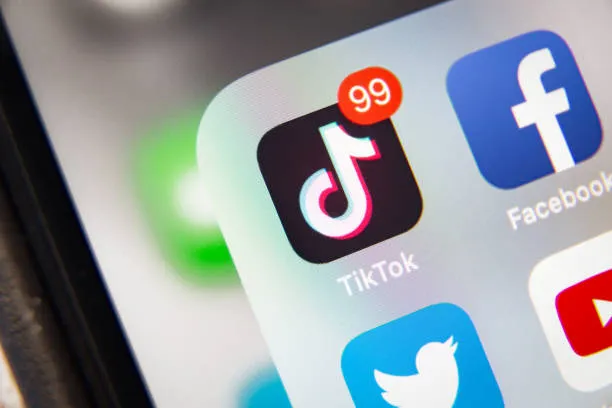
New Zealand’s conservative coalition government is moving ahead with a landmark bill to ban social media use for children under 16, positioning the country at the forefront of a global effort to curb the impact of platforms like TikTok, Instagram and YouTube on young people’s mental health. Prime Minister Christopher Luxon confirmed that the legislation will be introduced in Parliament, even as key coalition partners label the proposal a “slippery slope” and question whether such restrictions can work in practice.
New Zealand Social Media Ban Bill: Key Provisions and Penalties
The forthcoming social media age‑restriction bill would make it unlawful for children under 16 to access major social platforms, placing the primary responsibility for enforcement on the companies rather than on parents or schools. Under the draft framework, “high‑risk” platforms such as TikTok, Instagram, Snapchat, Facebook and YouTube would be required to take “reasonable steps” to verify user ages and prevent under‑16s from creating accounts or using their services.
To ensure compliance, the bill proposes fines of up to 10% of a platform’s global revenue for companies that fail to meet the age‑verification and access‑blocking requirements, mirroring the tough penalty structure in Australia’s pioneering under‑16 social media ban. An independent online safety regulator housed within the Department of Internal Affairs would be established to investigate platforms, monitor compliance and bring enforcement action where necessary.
Age Verification: Facial Technology, Digital IDs and Account Data
At the heart of the legislation is a controversial age‑verification regime designed to distinguish adults and older teens from younger children. According to government factsheets and statements, platforms will be allowed and expected to use a mix of tools, including:
-
Existing account information and behavioural signals.
-
Facial age estimation technology that assesses a user’s apparent age without storing biometric data.
-
Digital identity services and formal ID documents, such as passports or driver licences, where appropriate.
The government argues that this multi‑layered approach will give platforms flexibility while still making it significantly harder for under‑16s to maintain accounts or sign up anew. However, critics say the measures could be intrusive, technically complex and difficult to apply uniformly across global platforms with millions of users.
Luxon’s Case: Mental Health, Sleep and ‘Addictive Technology’
Prime Minister Christopher Luxon has framed the bill as a protective measure for an entire generation, citing rising concern about online bullying, exposure to harmful content and the addictive design of social media feeds.
“We simply cannot accept the harm being done to a generation of New Zealand children,” Luxon said, arguing that social media is exposing young users to “harmful content, addictive technology and pressures they are not equipped to deal with,” and that this is undermining their family life, mental health, sleep and education.
Luxon also acknowledged that the ban will be imperfect and difficult to enforce, noting that “we won’t get every single child off social media” and that some will inevitably find ways to circumvent the restrictions. Nonetheless, he insists the issue is “just way too important not to at least try,” and has encouraged opposition parties to treat the bill as a non‑partisan child‑protection measure rather than a purely political initiative.
Coalition Partners Call It a ‘Slippery Slope’
Despite being championed by the National Party, the bill’s passage through Parliament is far from guaranteed. Two of National’s coalition partners have publicly voiced unease or outright opposition to the approach:
-
New Zealand First, led by Foreign Minister Winston Peters, has said it will not support the bill, warning that such legislation risks becoming a “slippery slope” and arguing that keeping children off social media should be primarily a parental responsibility, not a matter for heavy‑handed state intervention.
-
The ACT Party has previously condemned similar proposals as “simple, neat and wrong,” with leader David Seymour arguing in Parliament that a blanket ban overlooks the complexities of the internet and fails to address underlying issues such as parental engagement and digital literacy.
Their stance leaves National potentially dependent on votes from the opposition Labour Party if it wants to secure enough support to pass the bill before the next election, a dynamic already visible in earlier efforts to advance a member’s bill on social media age restrictions.
VPNs and Enforcement: Department of Internal Affairs Pushes Back
Technical questions about how the ban would be enforced have centred on the use of Virtual Private Networks (VPNs), which allow users to route traffic through overseas servers and bypass geo‑based restrictions. Critics have asked whether the government plans to regulate or block VPN usage among minors to prevent them from sidestepping the ban.
The Department of Internal Affairs (DIA) has clarified in response to an Official Information Act request that it has not provided advice on options to restrict, ban or regulate VPNs, nor has it been asked to do so. A government factsheet further states that the legislation does not regulate VPNs at all, instead expecting platforms to use existing tools to detect and respond when users appear to be using VPNs to circumvent age controls.
Officials point to Australian data suggesting that VPN usage among children to evade age‑restriction rules is relatively rare—around 3%—as evidence that a ban can remain effective even without direct VPN regulation.
Global Context: From Australia to Europe
New Zealand’s move follows a series of aggressive regulatory initiatives worldwide aimed at limiting young people’s access to social media and tightening platform responsibilities.
-
Australia became the first country to ban social media for children under 16 in December 2025, blocking minors from platforms including TikTok, YouTube, Instagram and Facebook and imposing penalties of up to A$49.5 million on companies that fail to comply.
-
In the United Kingdom, plans are advancing to approve a ban on social media for under‑16s by Christmas, with implementation expected around Spring 2027, alongside proposals requiring tech firms to stop minors circulating nude images or face new legislation.
-
China has introduced a “minor mode” that imposes device‑level and app‑specific time limits based on age, rather than a blanket ban.
-
Denmark has announced plans to ban social media for children under 15, while allowing parents to grant controlled access from age 13.
-
In France, a bill banning social media access for under‑15s was blocked by the country’s top court on grounds that it infringed on freedom of expression, highlighting the legal and constitutional constraints such measures can face.
-
Germany allows minors aged 13 to 16 to use social media only with parental consent, though child‑protection advocates say current controls are still insufficient.
-
Greece is reported to be “very close” to announcing a ban for under‑15s, reflecting similar concerns about online bullying and mental health.
Luxon has explicitly cited Australia’s experience as a model and cautionary tale, arguing that New Zealand must “learn from the Australian mistakes” while recognising that the neighbour’s law demonstrates what is possible in terms of age‑based restrictions.
From Member’s Bill to Government Legislation
The current bill builds on earlier efforts by National MP Catherine Wedd, who introduced the Social Media (Age‑Restricted Users) Bill as a member’s bill in 2025. That proposal sought to ban under‑16s from having accounts on social media services by forcing platforms to implement strict verification measures and empowering courts to impose fines for failures.
Although the member’s bill was halted and work on it paused in mid‑2026 while the government prepared a broader law, it helped lay the groundwork for the present initiative, including the idea of an independent regulator and a comprehensive framework for online safety. A parliamentary committee inquiry into social media‑related harm has since recommended age restrictions, an online safety regulator and tighter platform liability, giving further institutional backing to the concept.
What Comes Next for New Zealand’s Social Media Ban
With the new government bill now being drafted by the Parliamentary Counsel Office and slated for introduction before voters go to the polls, New Zealand is on track to become one of the strictest jurisdictions in the world on children’s social media access—if the law can secure enough parliamentary support.
Supporters argue the ban is a necessary response to mounting evidence that heavy social media use is linked to anxiety, depression, sleep disruption and educational problems among teenagers, and say only strong legal measures can make global platforms take child safety seriously.
Opponents, including parts of the governing coalition, warn it could be difficult to enforce, intrusive for all users and potentially harmful to free expression, while shifting responsibility away from parents and educators.
The coming months of parliamentary debate will determine whether New Zealand follows Australia in implementing a full under‑16 ban, or whether the proposal is watered down into a more flexible age‑restriction and safety‑by‑design framework. Either way, the bill has already made the country a focal point in the global battle over how far governments should go to regulate children’s lives online.