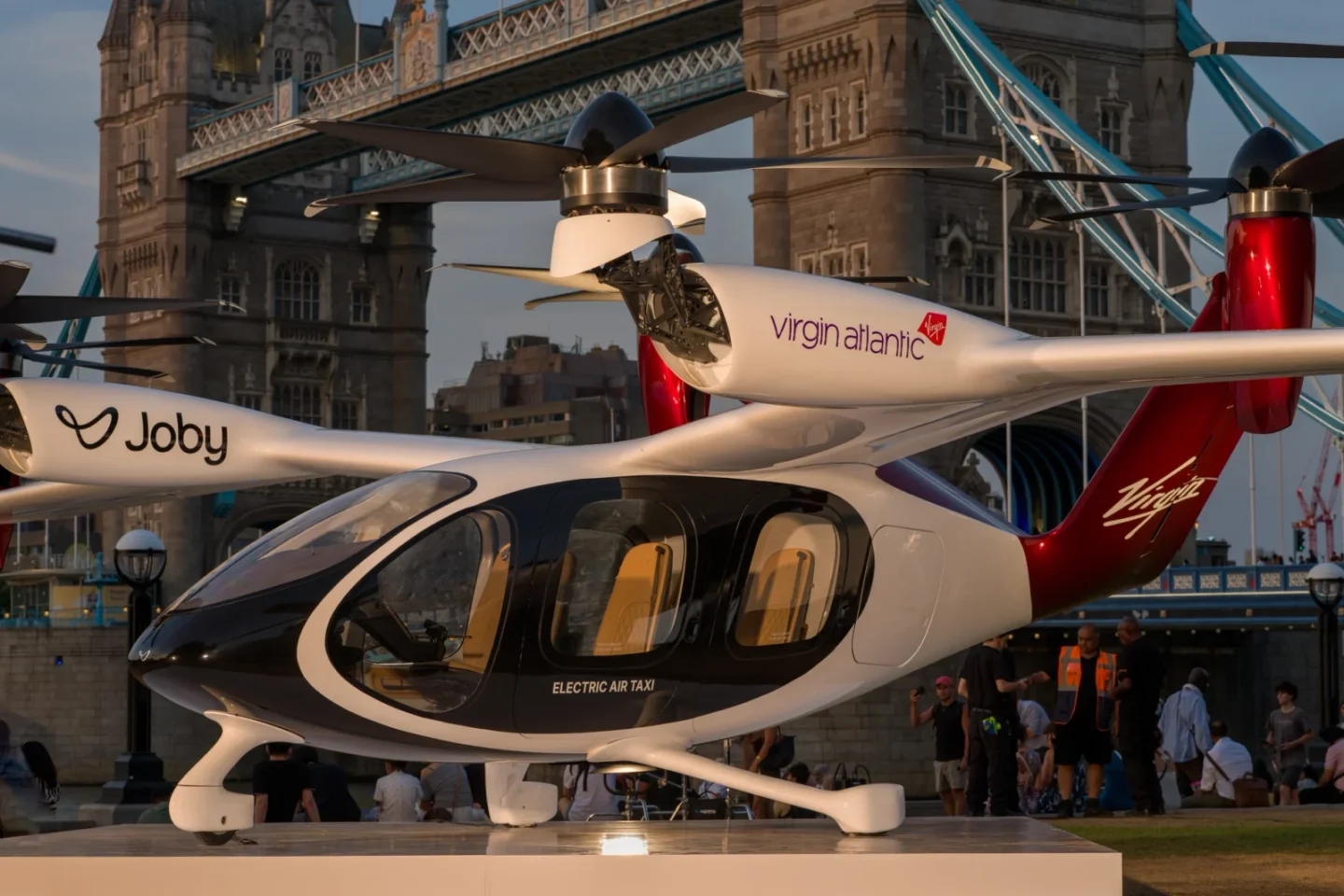
Joby Aviation has agreed to buy U.S. defense contractor Resonant Sciences in a $500 million cash‑and‑stock deal, a bold move that pushes the electric air taxi pioneer deeper into the military technology market even as its flagship eVTOL aircraft has yet to carry paying passengers. The acquisition is designed to create a standalone defense division that generates revenue today, giving Joby a second growth engine alongside its capital‑intensive urban air taxi business
Deal Overview: $450 Million in Cash, $50 Million in Stock
Under the terms disclosed by the companies, Joby will acquire Resonant Sciences for $500 million, funded with $450 million in cash and $50 million in Joby stock. The Dayton, Ohio‑based contractor will become a separate defense unit within Joby, retaining its name and leadership under co‑founder and CEO J. Micah North, and will continue to operate from its existing facilities.
The transaction, expected to close in the first half of 2027 subject to regulatory approvals, is being pitched as a relatively attractively priced asset: Resonant has generated more than $100 million in revenue over the past 12 months, up roughly 40% year‑on‑year, and delivers adjusted EBITDA margins in the high teens, implying a purchase price of under 5x trailing revenue. The company employs around 250 staff, with over 90% holding U.S. security clearances, and works on more than 20 commercial and military airframes, including classified U.S. government programmes.
Who Is Resonant Sciences and Why It Matters for Joby
Resonant Sciences specialises in radio‑frequency (RF) and sensor systems, antennas and radomes used to enhance the survivability and performance of aircraft and other platforms. Its customer base includes U.S. defense agencies and prime contractors, giving Joby a direct line into Pentagon‑grade programmes and a portfolio of profitable, cash‑generating contracts.
For Joby, best known for its four‑passenger electric vertical take‑off and landing (eVTOL) aircraft, the acquisition complements an existing though much smaller defense business. The new defense division will house:
Work on turbine‑electric and hydrogen‑electric propulsion systems
-
Joby’s autonomous control technologies
-
Ongoing projects with defense partners, including a joint hybrid VTOL concept with L3Harris Technologies announced in 2025.
-
Joby’s S4 eVTOL platform has already been adapted for defense applications. Under a U.S. government contract, the company demonstrated a hydrogen‑electric hybrid version of the S4 that flew 521 miles in 2024, more than double the range of its battery‑only prototype. Resonant’s RF and sensing capabilities are expected to slot into such long‑range, low‑signature missions, tightening the link between Joby’s civil and defense technology roadmaps.
Strategic Rationale: Building a Second Growth Engine
Joby casts the deal as a deliberate effort to de‑risk its business model by pairing a long‑dated, regulatory‑heavy air taxi rollout with a defense business that already brings in revenue and margins. The company became public in 2021 via a SPAC merger and in 2025 acquired Blade Air Mobility’s shared helicopter network for about $125 million, gaining a network of 12 terminals in key locations around New York’s JFK and Newark airports, Manhattan and Wall Street.
That Blade business now accounts for the bulk of Joby’s reported sales: in the second quarter of 2026, Joby booked $38.6 million in revenue, of which $36.2 million (94%) came from Blade’s traditional helicopter operations rather than eVTOL flights. The company lifted its full‑year 2026 revenue guidance to $115–125 million, largely on the back of that passenger network.
By folding Resonant into a dedicated defense division, Joby says it can:
-
Give its core eVTOL team clearer focus on FAA certification, production ramp‑up and launch of commercial air taxi services.
-
Use defense revenue to partly offset the heavy cash burn associated with certifying and scaling a new category of aircraft.
-
Leverage overlapping technologies—autonomy, advanced propulsion, systems integration—across military and civilian applications.
“Resonant has built an exceptional business,” Joby CEO JoeBen Bevirt said, while CFO Rodrigo Brumana highlighted “strong visibility into future revenue” via a backlog that more than doubled year‑on‑year, with first‑half bookings running over three times the previous year’s level.
Cash Runway Under Scrutiny After $450 Million Outlay
If the strategic logic is clear, so too is the financing risk. Joby ended June 2026 with $2.264 billion in cash and short‑term investments, according to its filings. The $450 million cash component of the Resonant deal represents about 19.9% of that liquidity, a sizeable commitment for a company still spending heavily on certification and commercial readiness.
Joby’s cash usage is accelerating: it burned $202 million in cash in the second quarter alone and has guided to $385–415 million of cash use in the second half of 2026. Trefis estimates that the company has incurred roughly $0.9 billion in operating losses over the past 12 months, with an operating margin around –759%, in sharp contrast to the S&P 500 average of +18.5%.
That burn rate is the backdrop for a stock market reaction that was decidedly cautious. Joby’s shares fell about 4.4% to $8.42 on the day the deal was announced, closing near the session’s low on trading volumes roughly 15% above the recent average. Over the past year, the stock remains down about 49%, and roughly 55% below its 52‑week high, even after a 14% rise in the past month.
Analysts are split: six Wall Street firms covering the stock are evenly divided between buy, hold and sell ratings, with a consensus price target around $11.25, ranging from $7 to $18, underscoring diverging views on the timeline for certification, capital needs and the value of the defense pivot.
Air Taxi Still Pre‑Revenue: Certification and Production Remain Key Risks
Crucially, the deal does not change the fact that Joby’s core electric air taxi has not yet flown a paying passenger. The company is targeting its first commercial passengers before the end of 2026, intending to start with pilot‑only flights under the White House‑backed eIPP (eVTOL Integration Pilot Program) in the Dallas–Fort Worth area, then transition to paid services.
Joby has five aircraft flying, including its first FAA‑conforming prototype, which will be used for Type Inspection Authorisation (TIA) testing that allows FAA pilots to log flights for certification credit. Another 12 aircraft are in production, with at least two scheduled for delivery in the second half of 2026. The company says the certification programme is now in its fifth and final stage, and that it has reduced its manufacturing non‑conformance rate by nearly 40% in the first half of 2026 as it learns to build conforming aircraft at higher complexity.
Trefis notes that Joby’s current price‑to‑sales ratio of around 73.5 (versus 3.3 for the S&P 500) is being driven by the Blade helicopter revenues, even though investors are effectively paying for the future electric air taxi business. That means the valuation still hinges on one binary milestone: FAA certification and successful service entry, with any delay forcing investors to reconcile heavy cash burn with slower‑than‑expected revenue growth.
Competitive Context: Archer vs Joby in the eVTOL Race
The Resonant deal also comes as Joby faces intensifying competition from Archer Aviation, its closest U.S. rival in the eVTOL space. Both companies are developing four‑passenger aircraft, targeting early U.S. operations in 2026 and building factories with the backing of major airline and automotive partners.
According to Aerospace Global News, Joby currently holds a slight edge in commercial readiness: its first FAA‑conforming aircraft flew in March 2026, it has accumulated more piloted flight experience, and it has a six‑year exclusive launch agreement with Dubai’s Roads and Transport Authority, positioning the UAE as a key early market. Joby’s acquisition of Blade’s passenger business gives it an existing urban aviation network and customer base that can be transitioned from helicopters to eVTOLs.
Archer, meanwhile, has moved faster through some certification plan milestones and secured marquee partnerships with United Airlines, Southwest and the LA 2028 Olympics, signalling strong demand once its own Midnight eVTOL is approved. Neither company has yet proven it can mass‑produce certified eVTOLs at scale, keeping the race finely balanced.
Investor Takeaway: Diversification With Execution Risk
For Joby, buying Resonant Sciences is a high‑stakes attempt to blend speculative growth with tangible revenue. On the plus side:
-
It adds a profitable, growing defense contractor with over $100 million in trailing revenue and high‑teens EBITDA margins.
-
It strengthens Joby’s technology stack and relationships in defense, a market where advanced VTOL, autonomy and hybrid propulsion have clear near‑term applications.
-
It gives Joby’s civil air taxi team more room to focus on certification and scale‑up, while a separate defense unit chases contracts and cash flow.
On the downside:
-
The $450 million cash outlay meaningfully shortens Joby’s cushion unless defense earnings ramp quickly and certification stays on track.
-
The core eVTOL business still has no passenger revenue, a deeply negative operating margin and a long list of regulatory and manufacturing milestones to clear.
-
Any delays in integrating Resonant, converting backlog into cash or securing new contracts could compound funding pressure, potentially leading to future equity dilution or debt.
As one analyst note put it, cash “buys time, but time is not a certification date.” Joby’s bet is that by the time its electric air taxi is ready to fly passengers at scale, a maturing defense unit anchored by Resonant will be helping to pay the bills. Whether that calculation holds will depend less on the elegance of the strategic logic and more on execution over the next 18–24 months.