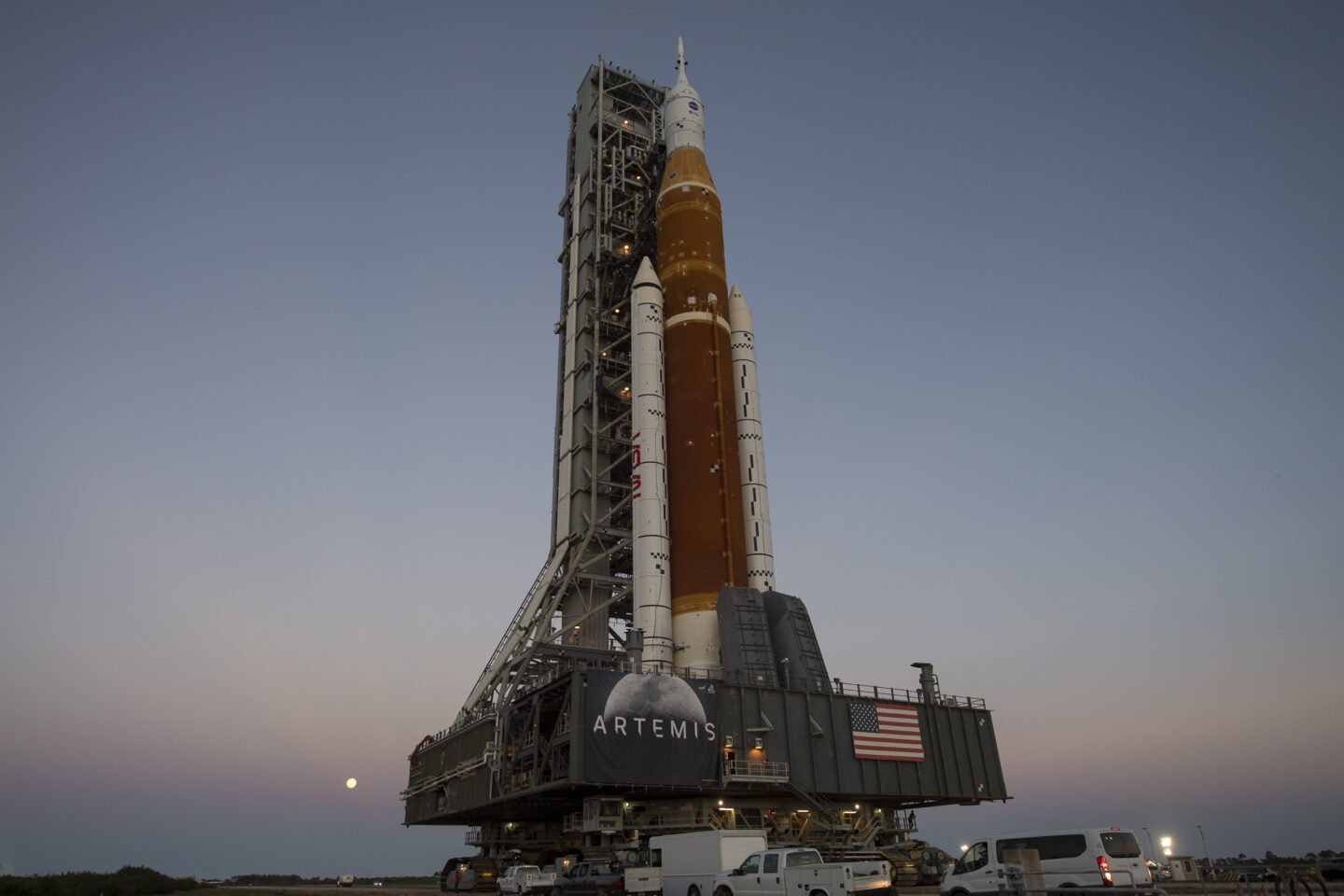
NASA’s Artemis II mission successfully launched on 1 April 2026 at 6:35 p.m. EDT from Kennedy Space Center’s Launch Complex 39B, sending four astronauts—Reid Wiseman (commander), Victor Glover (pilot), Christina Koch (mission specialist), and Jeremy Hansen (CSA mission specialist)—on a 10‑day lunar flyby, the first crewed deep‑space voyage since Apollo 17 in 1972. The Space Launch System (SLS) rocket and Orion spacecraft performed flawlessly, marking a pivotal step toward Artemis III’s 2027 lunar landing.
Artemis II Crew: Reid Wiseman, Victor Glover, Christina Koch, Jeremy Hansen
Commander Reid Wiseman, Pilot Victor Glover, Mission Specialist Christina Koch (record 328‑day ISS stay), and Canadian Jeremy Hansen entered Orion after suiting up, strapped in for liftoff during the 2‑hour window (6:24–8:24 p.m. EDT).
Hansen becomes Canada’s first deep‑space astronaut; Koch is the first woman on a lunar trajectory. Crew waved to crowds post‑ingress; countdown reached T‑5:15 before holding, but all systems green for launch.
SLS Rocket Launch: Historic Liftoff from Kennedy Space Centre
SLS Block 1—NASA’s most powerful rocket—thundered off Pad 39B, same site as Apollo/Saturn V, carrying Orion for ~10‑day mission orbiting Moon without landing.
Key milestones:
-
Perigee Raise: Complete, boosting low Earth orbit trajectory.
-
Apogee Raise Burn: Successfully executed, setting lunar path.
-
Solar Arrays: Orion unfurled wings post‑separation.
NASA confirmed nominal performance; live streams captured spectacular flames and sonic booms.
Artemis II Mission Profile: 10‑Day Lunar Flyby, No Landing
Artemis II tests Orion/SLS for deep space:
-
Trajectory: Earth orbit → translunar injection → lunar flyby (19.3km closest approach) → return splashdown Pacific 10 days later.
-
Objectives: Human‑rated Orion systems validation, life support, comms, abort scenarios.
-
Distance: 1.4 million km round trip, farthest humans since Apollo.
No lunar landing (Artemis III 2027); focus on SLS/Orion deep‑space readiness.
Orion Toilet Malfunction: Only Space Lavatory Fixed Post‑Launch
Mission highlight: Orion’s sole toilet malfunctioned shortly after launch, forcing contingency procedures. NASA engineers remotely fixed the Universal Waste Management System (UWMS)—upgraded from ISS tech with urine funnels, solid waste bags, and airflow suction for microgravity.
Crew uses “poop filing cabinet” for storage; fix restores privacy for 10‑day trip. No health risks; NASA calls it “normal troubleshooting.”
Launch Delays Overcome: Hydrogen Leaks, Helium Issues Resolved
Artemis II faced setbacks:
-
Feb 2026 hydrogen leak during Wet Dress Rehearsal (WDR).
-
Helium flow issue pushed from Feb to March/April.
-
Cold weather, hatch valve work, and audio dropouts during closeouts.
Teams warmed seals, adjusted propellants, and demonstrated nitrogen‑to‑air purges, improving safety.
Artemis Program Context: Path to Moon Landing 2027
Artemis I (uncrewed 2022) validated SLS/Orion; II proves crewed capability; III targets south pole landing 2027 with SpaceX Starship HLS.
Crew will test proximity operations, manual control, and emergency scenarios.
International Collaboration: Jeremy Hansen Represents CSA
Hansen’s inclusion via Artemis Accords (signed by 40+ nations) underscores partnership; Canada contributes Canadarm3 for the Gateway station.
Live Coverage & Public Reaction
NASA TV/YouTube: 13M+ peak viewers; BBC/Sky News global streams.
Social buzz: #ArtemisII trended; “spectacular” flames, sonic booms captivated audiences.
Mission Timeline Ahead
-
Day 2–3: Outbound trajectory, systems checks.
-
Day 5: Lunar flyby (4km/h relative speed).
-
Day 10: Pacific splashdown off California.
NASA holds pressers; crew tweets from Orion.
Technical Highlights: SLS/Orion Performance
SLS: 8.8M lbs thrust (98% Saturn V); 27‑engine core stage.
Orion: Heat shield survived 5,000°F reentry (Artemis I); solar arrays deployed flawlessly.
Toilet fix demonstrates remote ops capability critical for Artemis III/ Gateway.
Artemis II launches humanity toward sustainable lunar presence, paving the way to Mars. Success reinforces US leadership amid China’s Tiangong/ILRS rivalry.