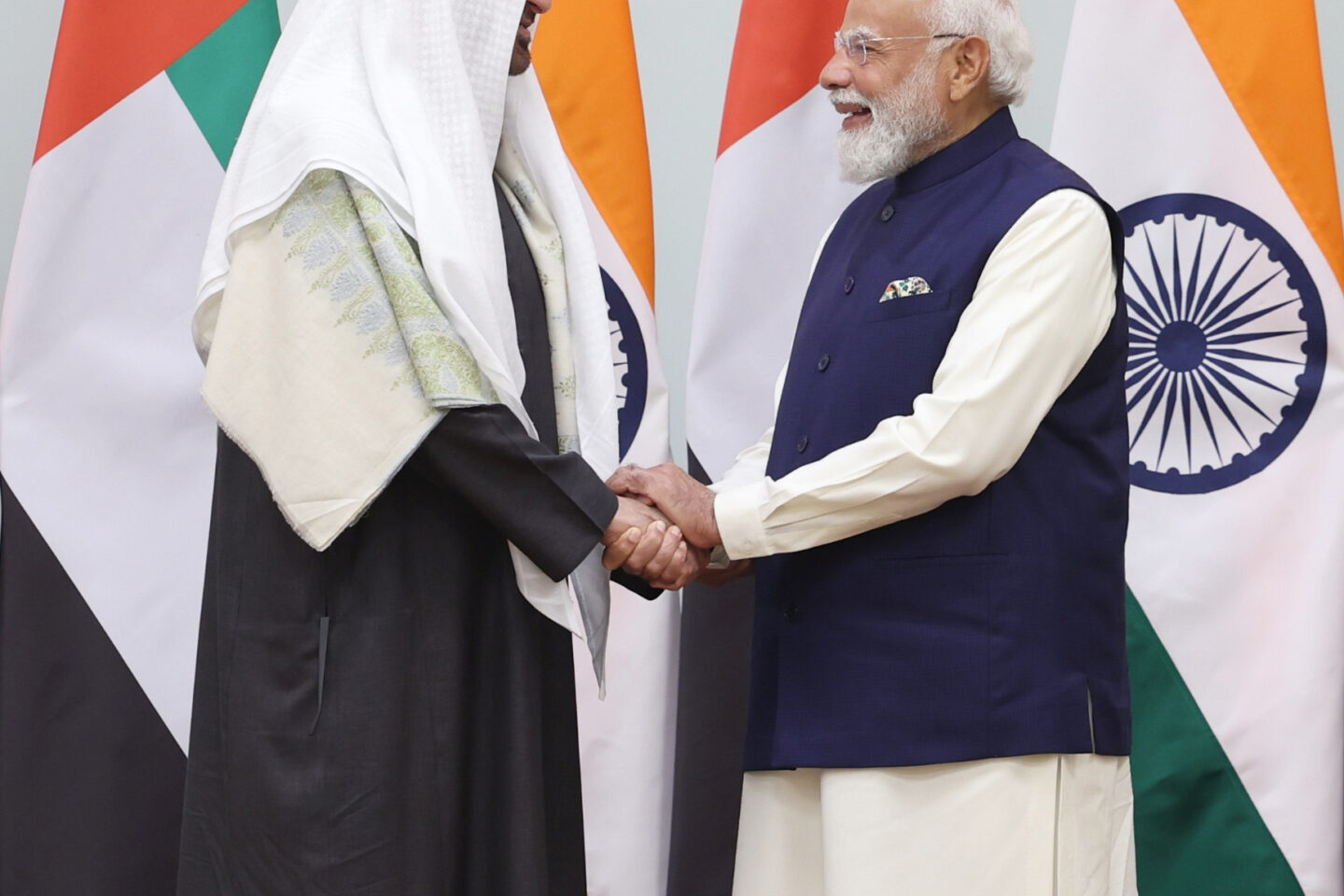
UAE President Sheikh Mohamed bin Zayed Al Nahyan (MBZ) made a whirlwind three-hour visit to New Delhi on January 19, 2026, hosted by Prime Minister Narendra Modi at 7 Lok Kalyan Marg, cementing the robust strategic partnership between the two nations. This marked MBZ’s third official trip to India as president and fifth overall in a decade, at PM Modi’s invitation, focusing on sustainable development, economic growth, and deepened bilateral cooperation across future-focused sectors.
The concise yet impactful meeting highlighted the enduring friendship, with both leaders exchanging views on advancing multifaceted ties. PM Modi expressed deep appreciation for MBZ’s gesture of visiting Delhi, noting discussions spanned wide-ranging issues to bolster India-UAE relations. MBZ echoed the sentiment on X, pledging continued collaboration for mutual progress benefiting their peoples. While no formal joint statement detailed specific pacts during this visit, it built on prior frameworks, emphasising trust and convergence in key areas.
India-UAE defence cooperation emerged as a focal speculation, fueled by reports of advanced negotiations for BrahMos supersonic cruise missiles. Analysts peg the potential deal at hundreds of millions, enhancing UAE’s naval and land capabilities while showcasing India’s indigenous defence prowess. This aligns with UAE’s diversification from Western suppliers and joint ventures like military exercises. Media buzz linked the timing to Operation Sindoor’s success, where BrahMos devastated targets, positioning it as a global draw—reportedly snubbing Pakistan’s JF-17 offers in favour of India’s tech.
The partnership transcends arms, encompassing trade, energy security, counter-terrorism, and tech innovation. Both nations share stakes in Gulf stability, with UAE’s investments in India surpassing $100 billion via frameworks like I2U2. PM Modi’s hosting underscored personal rapport, evoking past gestures that propelled ties skyward. Discussions likely touched investment, digital infrastructure, and green energy, reflecting comprehensive economic agendas.
Pakistan watches warily, viewing UAE’s tilt toward advanced Indian weaponry as a regional shift. Islamabad’s overtures for JF-17 sales reportedly faltered, amplifying anxieties over power dynamics amid historical rivalries. No confirmed India-Pakistan “donation” surfaced; instead, the visit reinforced India’s firm anti-terror stance, slamming financers in joint narratives—a nod to shared security priorities without direct concessions.
Geopolitically, MBZ’s Delhi dash signals Abu Dhabi’s strategic hedging in a volatile Middle East-South Asia nexus. For India, it validates “Make in India” exports, with BrahMos joining the Philippines and Indonesia deals. UAE gains a reliable partner for Persian Gulf deterrence, potentially eyeing Yemen or Iran contingencies. Broader implications include tech transfers, co-development, and exercises amplifying interoperability.
Future horizons gleam bright: expanded pacts in AI, space, and cyber realms could follow, mirroring ICEGATE successes. As Trump-era US policies evolve, non-Western alliances like this fortify supply chains. The visit, though brief, reaffirmed commitments to prosperity, with Modi and MBZ charting paths for resilient growth amid global flux. India-UAE synergy promises to reshape regional equations, prioritising stability and innovation.