The 2026 Pokémon World Championship brings with it an exciting energy, marking the continuity and development of the Pokémon franchise. Today, the two-decade-old tradition has gained a global audience and implemented various features.
In this article, we will provide an overview and trace the development of the Pokémon World Championship.
The Pokémon World Championship is the highest stage of competitive Pokémon battles. What started as a small-scale trading card game (TCG) in 2004 has grown exponentially, featuring various games from the popular global franchise. Today, the Pokémon World Championship brings the best players from dozens of countries and draws millions of viewers across the globe.
The first-ever Pokémon World Championships were held in 2004 in Orlando, Florida. Initially, the competition was seen as a niche activity, limiting itself to only dedicated fans of the franchise. However, through years of development and structuring, the Pokémon Company International formalized the competitive structure through the Play! Pokémon program. The program laid the foundation of the later competitions by standardizing rules, rankings and the qualification system. By the late 2000s, the Championship found itself expanding to regions of North America, Europe, Asia, Latin America and Oceania.
As new Pokémon games were released, the competitive formats evolved with them. New game modes such as double battle in Video Game Championships (VGC) brought more strategic complexity and updates on rules and regulations, as well as the introduction of new Pokémons keeps the meta-game fresh and unpredictable.
Structure and Qualification of the Pokémon World Championships
The Pokémon World Championship is not an open-to-all tournament. It involves various steps and stages.
The players must compete in official Pokémon tournaments held throughout the year. These involve local league challenges and cups, regional championships, international championships, online qualifications and global events.
Strong performances in these events earn the player Championship Points, which, when accumulated enough, earn them an invitation to the World Championship.
The Championship is divided into three divisions: (1) Junior Division, (2) Senior Division (3) Masters Division.
These divisions ensure an inclusive approach to competitive gaming.
The Pokémon company heavily protects the competition’s integrity by closely monitoring players and formulating certain rules and regulations to avoid the exploitation of certain abilities or tactics.
Competitive Events at the World Championships
Instead of focusing on a single game, the Pokémon World Championships follows a multi-game format. This allows the event to showcase various ways in which Pokémon can be played competitively.
- Video Game Championship (VGC): The VGC is one of the more popular competitive formats. It uses the older generation Pokémon games model, where players battle using a team of Pokémon under official rules. Typically, it is played in double battles where two Pokémon from each side fight against one another. Victory depends on various factors, from team composition to speed and positioning and the efficient use of limited resources.
The strategic depth that VGC requires draws great attention, which makes it a key feature of the World Championships.
- Pokémon Trading Card Game (TCG): The Pokémon TCG is the foundational pillar of the World Championship. With the ever-growing popularity of Pokémon cards, TCG allows collectors and fans to witness the strategic implementation of Pokémon Cards. In TCG, players must construct a deck using hundreds of available cards, each with unique abilities and interactions. Success in TCG heavily relies on careful deck construction, long-term planning and strategic reading of the opponent. TCG world champions often are rewarded with rare ‘Pokémon Champion’s’ cards, making them a sought-after collector’s item.
- Pokémon Go Championship: Pokémon GO introduces mobile gaming into the competitive spotlight. Battles are usually fast-paced and demand quick reaction, Pokémon knowledge and precise decision-making.
- Pokémon Unite Championship: The Pokémon UNITE represents the expansion into real-time, team-based esports. Here, teams of five players compete in a battle arena (MOBA), where coordination, communication and tactical awareness are key factors to winning.
The World Championship Experience
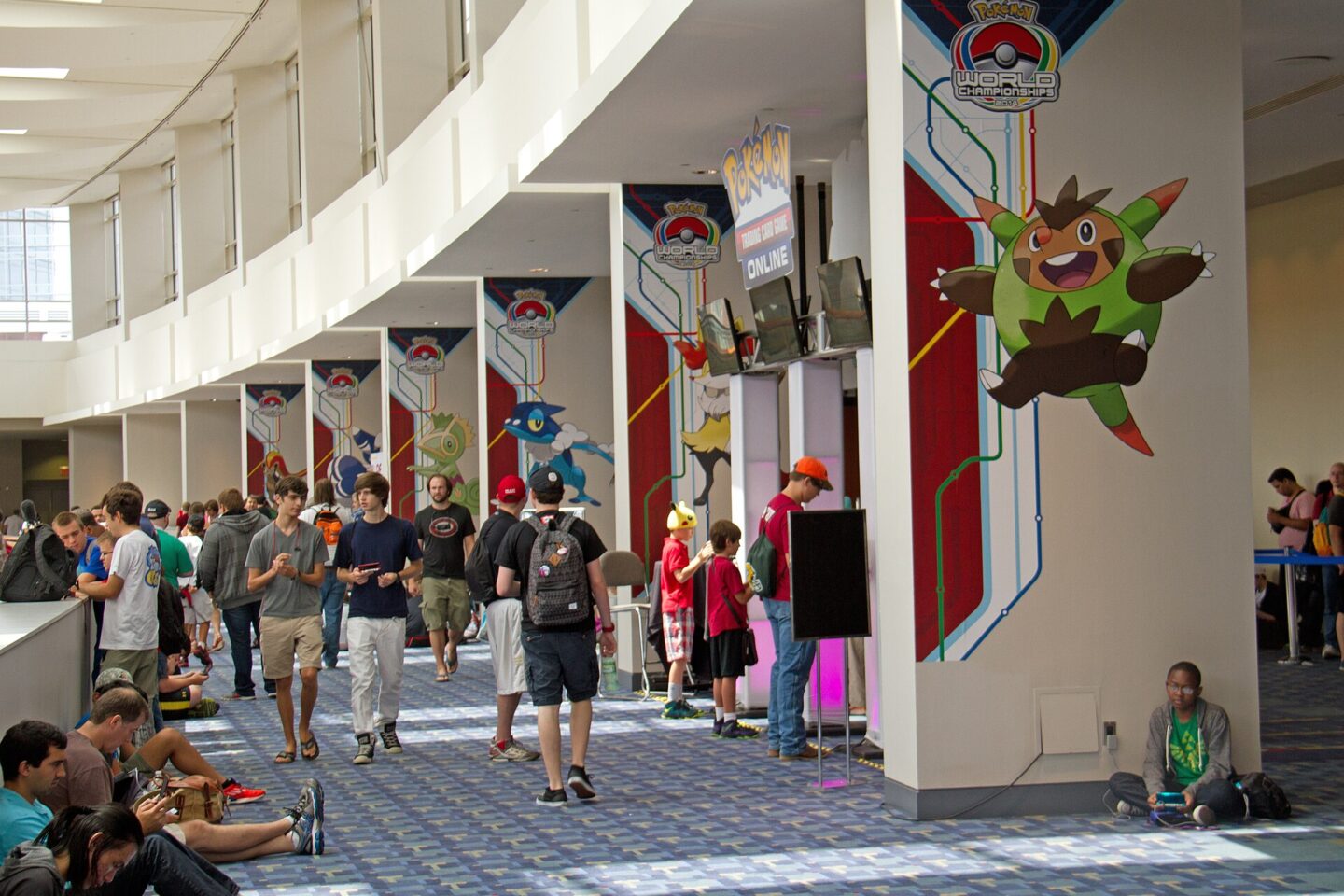
Beyond the competition, the Pokémon World Championship is a global celebration and festival for fans of the franchise. The fans are treated to live matches, can participate in games and side tournaments and explore the world of Pokémon through live exhibitions. Additionally, live broadcasts and online streaming platforms allow fans worldwide to experience the excitement, which strengthens the Pokémon culture globally.
Into the Future of Pokémon World Championship.
The Pokémon World Championship is bound to enter a new phase of evolution as a competitive gaming event.
With development in fields of technology and artificial intelligence, the gaming industry is expected to undergo various transformations. Pokémon, being one of the defining cultural symbols of a generation, is expected to implement this progression, which might transform the Pokémon world as a whole.
In 2016, the release of the popular mobile game Pokémon Go saw an innovative and transformative development in mobile gaming. The implementation of Augmented Reality (AR) in Pokémon took the world by storm, becoming one of the most popular games at the time. Ten years later, the question arises: what new exciting feature will the Pokémon franchise bring, and how will it transform the Pokémon World Championship? While certain progress has been made, fans are expecting a cultural phenomenon similar to that of its predecessor.
Author: Joshua Kharjana
Joshua Kharjana is a postgraduate student currently pursuing his Master’s degree in English Literature. His academic interests include cultural studies, psychology, and narrative theory, and his work engages critically with literature’s relationship to society. He has edited the college magazine and has published both poems and research articles. He aims to continue developing his research and writing within both academic and creative spaces.