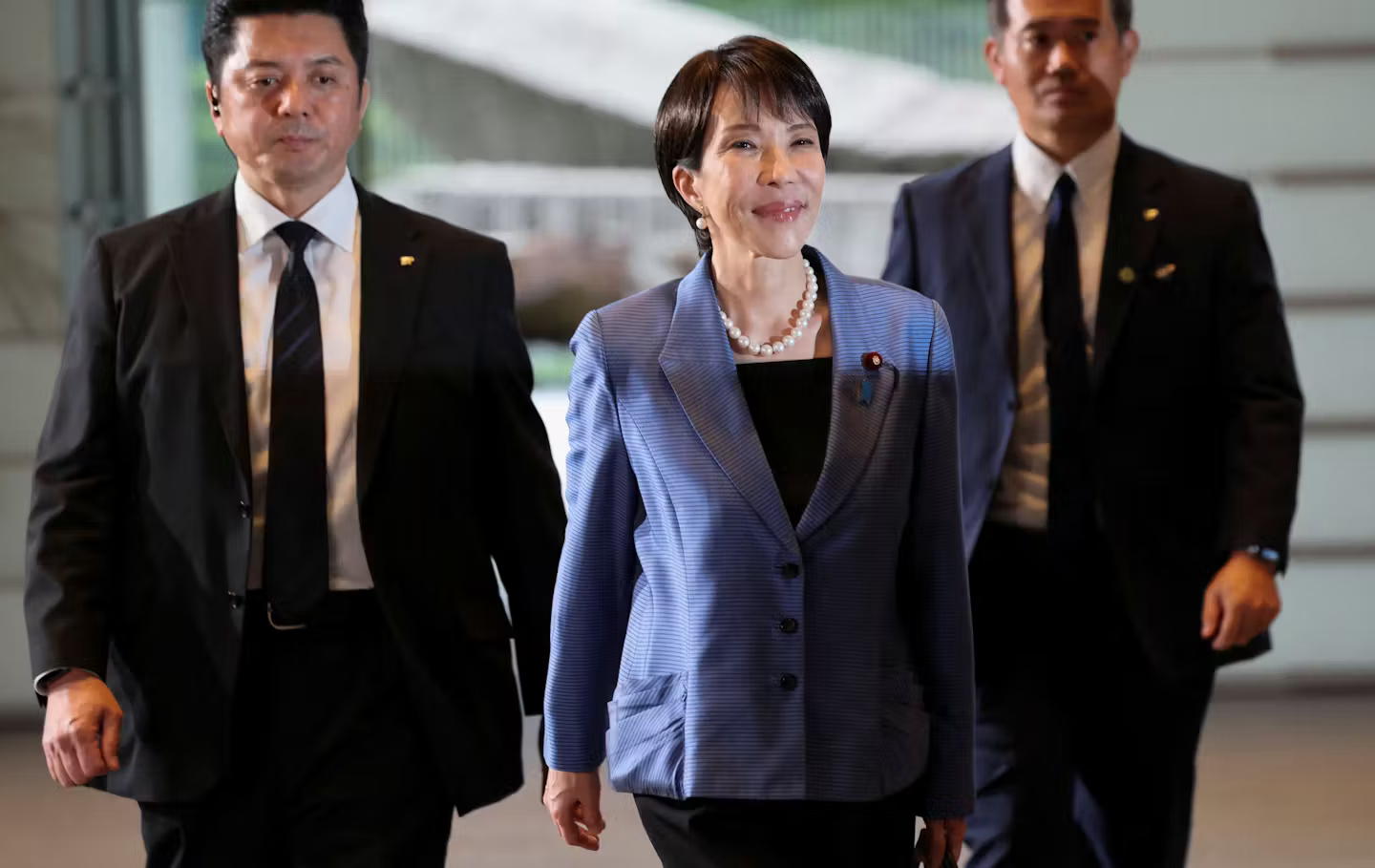
Japan has made history. Sanae Takaichi, a veteran lawmaker and long-time member of the Liberal Democratic Party (LDP), has officially become the country’s first female prime minister, marking a significant moment in Japanese political history.
The 64-year-old politician, known for her conservative views and strong stance on national security, was confirmed on Tuesday, October 21, after forming a coalition government with the right-leaning Japan Innovation Party (JIP). Her appointment follows years of speculation about when — and if — Japan would ever see a woman in its highest political office.
Breaking Glass Ceilings: Takaichi’s Path to Leadership
Sanae Takaichi’s road to the premiership has been one of persistence and political longevity. Once a protege of former Prime Minister Shinzo Abe, she served in several key roles including Minister of Internal Affairs and Communications. She first contested party leadership in 2021 but lost to then-PM Fumio Kishida. That campaign, however, firmly established her as a top contender for the future.
Her leadership of the LDP began on October 4, 2025, when she replaced Shigeru Ishiba following internal turmoil and slumping party support. Days later, after the centrist Komeito Party pulled out of its coalition, Takaichi forged a new governing alliance with JIP — enabling her to gather enough parliamentary votes to assume the premiership.
A Conservative Vision for Japan’s Future
Takaichi is often described as a social and economic conservative, with policies focusing on national defense, constitutional reform, and traditional family structures. She has publicly admired Margaret Thatcher and pledged to appoint a cabinet with “Nordic-level” female representation — a sharp contrast to the previous government, which included only two women.
Her priorities include reviving Japan’s economy, addressing demographic decline, and enhancing energy independence. While she has moderated her previously hard-line rhetoric toward China, Takaichi remains firm on security issues and supports closer cooperation with the U.S. on defense matters.
Challenges Ahead: Governing a Divided Parliament
Despite her historic win, Takaichi faces daunting challenges. She leads a minority government in both houses of parliament, meaning she must rely on other parties to pass legislation. Immediate issues on her agenda include managing the economic slowdown, tackling Japan’s aging population, and resolving bilateral trade and defense issues with the United States, where President Donald Trump is scheduled to visit next week.
Her coalition partner, the Japan Innovation Party, has pushed for lowering the consumption tax on food and banning corporate donations — proposals that may strain consensus within the ruling bloc.
Economically, Takaichi’s policies echo the fiscal expansionism of Abenomics, but she has signaled a stronger commitment to fiscal discipline and sustainable growth.
A Symbol of Change in a Traditional Society
Takaichi’s appointment is a watershed moment for a country that has long lagged behind in gender equality. Japan ranked 118th out of 148 countries in the 2025 World Economic Forum’s Global Gender Gap Report, with women holding only about 15% of Lower House seats and a small fraction of executive positions in major corporations.
While her policies lean conservative — she opposes dual surnames for married couples and supports male-only imperial succession — supporters believe her leadership could inspire greater participation by women in politics and business.
“She’s strong-minded, regardless of being a woman,” said a resident in her hometown of Nara. “She’s firm about what’s right and wrong — and Japan needs that kind of decisiveness.”
Global Implications and the Road Ahead
Takaichi inherits a fragile political moment — a slowing economy, an ambitious U.S. trade agenda, and ongoing security challenges in East Asia. Her success or failure will not only shape the LDP’s future but could redefine Japan’s approach to gender and governance for years to come.
Her rise to power sends a message that Japanese politics — historically dominated by men — is slowly evolving. But whether her premiership will bring substantive institutional change or simply symbolic progress remains to be seen.
In summary: Sanae Takaichi’s elevation to Japan’s premiership marks both a historic first and a turning point for the nation’s political trajectory. Conservative yet groundbreaking, she embodies Japan’s delicate balance between tradition and transformation.