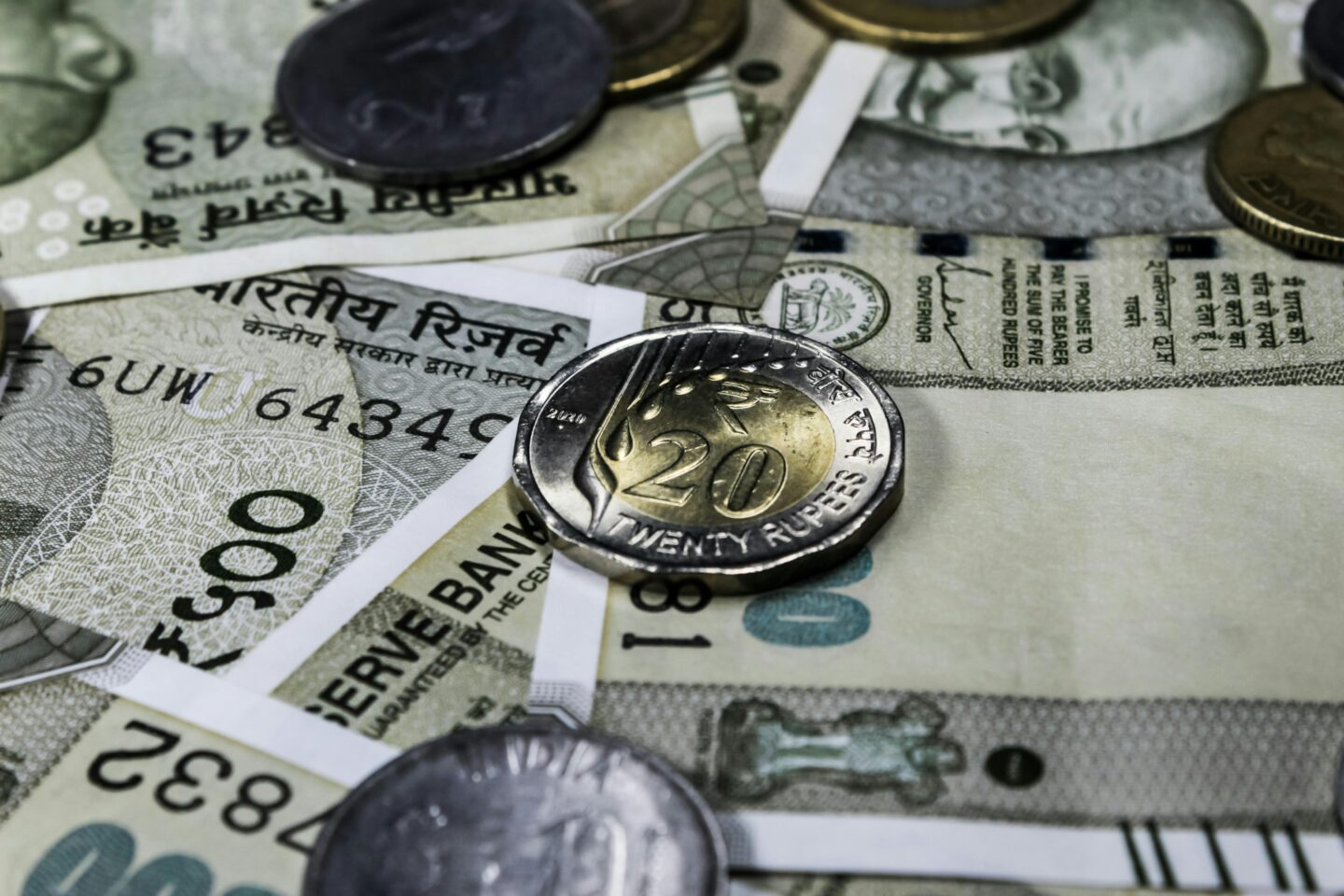
The Indian rupee fell past the 93 per US dollar mark for the first time on Friday, 20 March 2026, marking a new all‑time low as the Iran war, soaring crude oil prices and foreign investor outflows rattled emerging‑market assets. The sharp depreciation has intensified concerns about imported inflation, India’s external balances and the broader outlook for growth and financial markets.
Rupee vs US Dollar Today: INR Slips Past 93 for the First Time
At the interbank foreign exchange market, the rupee opened at around 92.92 against the US dollar, then breached the 93 level and slipped to an intraday low of around 93.28 per dollar in early trade, its weakest level on record. Several reports describe Friday as the first time the currency has traded above 93 per dollar in the onshore market, eclipsing a string of previous lifetime lows in the 92–92.9 range set earlier in March as the West Asia conflict escalated.
Reuters notes that the rupee has now depreciated by more than 3% so far in 2026, with over 2% of that fall coming since the Iran war flared up, underscoring how quickly the external shock has fed through the currency. Traders say the move past 93 follows days of pressure in offshore non‑deliverable forwards, where the rupee had already weakened beyond that level as markets priced in higher oil and deeper geopolitical risk.
Iran War, Crude Oil Above 100 and Safe‑Haven Dollar Weigh on INR
The immediate backdrop to the rupee’s slide is the intensifying conflict involving Iran, the US and Israel and wider instability in West Asia, which has driven up global energy prices and triggered a flight to safe‑haven assets such as the US dollar. Brent crude has surged to near 120 dollars per barrel at points in recent sessions, significantly above levels assumed in most economic forecasts for India.
India relies on imports for over 80% of its crude oil needs, making the rupee acutely sensitive to sustained spikes in oil prices that inflate the import bill, widen the current account deficit and feed domestic inflation. Analysts at Kotak and other brokerages have warned that as long as oil remains elevated while dollar liquidity tightens, the rupee will remain under depreciation pressure.
At the same time, the US dollar index has strengthened as investors price in the risk that the US Federal Reserve may keep interest rates higher for longer—or even consider further hikes—if war‑related energy shocks reignite global inflation, further supporting the greenback against emerging‑market currencies.
FII Outflows and Risk‑Off Sentiment Hit Indian Markets
The rupee’s weakness is occurring alongside a sharp correction in Indian equities and heavy foreign institutional investor (FII) selling. Reuters reports that foreign investors have pulled more than 8 billion dollars from Indian stocks this month, the largest monthly outflow since January 2025, as concerns over oil prices, currency risk and global growth mount.
Moneycontrol and other market trackers note that the benchmark Sensex and Nifty indices have recorded their steepest single‑day declines since 2024 in recent sessions, with all major sectoral indices closing in the red amid a spike in the India VIX volatility gauge. Strategists point out that when currency risk dominates the narrative, FIIs often reassess exposure to markets running large oil import bills, which can reinforce downward pressure on the rupee and domestic asset prices.
Phanisekhar Ponangi of Mavenark Investments told Moneycontrol that CY26 is likely to be a turbulent year for equities, with the “goldilocks” environment of low commodity prices and low policy rates reversing, and that “the rupee will be tested in ways the economy hasn’t experienced in many years.” He also warned that if the West Asia crisis persists for more than six months, the world could be staring at a global stagflation scenario—weak growth combined with high inflation—which would further complicate India’s macroeconomic management.
Oil Shock, Weak Rupee and the Risk of Imported Inflation
Economists caution that a weaker rupee amplifies the domestic impact of higher dollar‑denominated oil prices, because refiners must pay more in rupee terms for every barrel imported. This tends to feed into fuel prices, transportation costs and broader input costs in the economy, raising the risk that inflation—recently back within the Reserve Bank of India’s 2–6% comfort band—could re‑accelerate in the coming quarters.
Analysts at Indian and global banks quoted in recent reports say that if the crisis in West Asia remains intense and oil stays structurally higher, India could face a widening current account deficit, higher fiscal stress and pressure on interest rates, even if domestic growth remains relatively resilient. They also highlight potential second‑order effects, including weaker remittance flows from the Gulf region and softer capital inflows, which would further strain the rupee and external balances.
RBI Intervention and Policy Options on the Rupee
Traders told Reuters that central bank measures have helped soften the rupee’s fall, suggesting that the Reserve Bank of India has been intermittently selling dollars from its foreign‑exchange reserves to smooth volatility rather than defend a particular level. Earlier analyses from Kotak Securities similarly anticipated that the RBI would intervene periodically to prevent “disorderly” moves in the rupee while still allowing the currency to adjust to new fundamentals.
However, with the shock being driven by **global factors largely outside India’s control—war, oil and the global rate environment—**most economists expect the RBI to rely on a mix of tools: calibrated FX market intervention, liquidity management and clear communication, rather than aggressive rate hikes solely to defend the currency. Given that domestic growth and banking system stability remain relatively solid, the central bank is seen as prioritising containing excessive volatility and anchoring inflation expectations over fixing the rupee at any specific level.
Outlook: Could the Rupee Slide Towards 95 per Dollar?
Some market participants warn that if oil prices remain near current levels or move higher and the Iran conflict broadens or drags on, the rupee could see further downside, with levels around 95 per dollar mentioned as a potential stress scenario. Much will depend on how quickly tensions in West Asia de‑escalate, whether shipping flows through key chokepoints such as the Strait of Hormuz stabilise, and how the Fed and other major central banks react to any renewed inflation impulse.
Ponangi argues that if the crisis evolves into a longer‑lasting but lower‑intensity conflict, markets may gradually adapt to a “new normal” of structurally higher crude prices, though not without a period of volatility, weaker earnings growth and higher risk premia for energy‑importing economies. In that scenario, he suggests long‑term investors should prepare “buy lists” of strong franchises that could benefit once the worst of the earnings and margin damage is priced in.
What Businesses and Households Should Watch Next
For corporates, especially in energy‑intensive and import‑dependent sectors, the current environment underscores the importance of currency risk management, prudent hedging and cost control, as the combination of a weak rupee and high oil can compress margins rapidly. For households, the most immediate channels to monitor are fuel and transportation costs, which tend to be the first to reflect a weaker currency and higher crude.
Economists say that if oil prices stabilise and geopolitical risks ebb over the coming months, the rupee could regain some ground as risk appetite returns and FII flows stabilise; however, they caution that the days of a structurally strong rupee amid benign global conditions may be over for now. Until there is greater clarity on the Iran war, oil supply routes and global rate expectations, volatility in the rupee–dollar exchange rate is likely to remain elevated, keeping policymakers, investors and consumers on alert