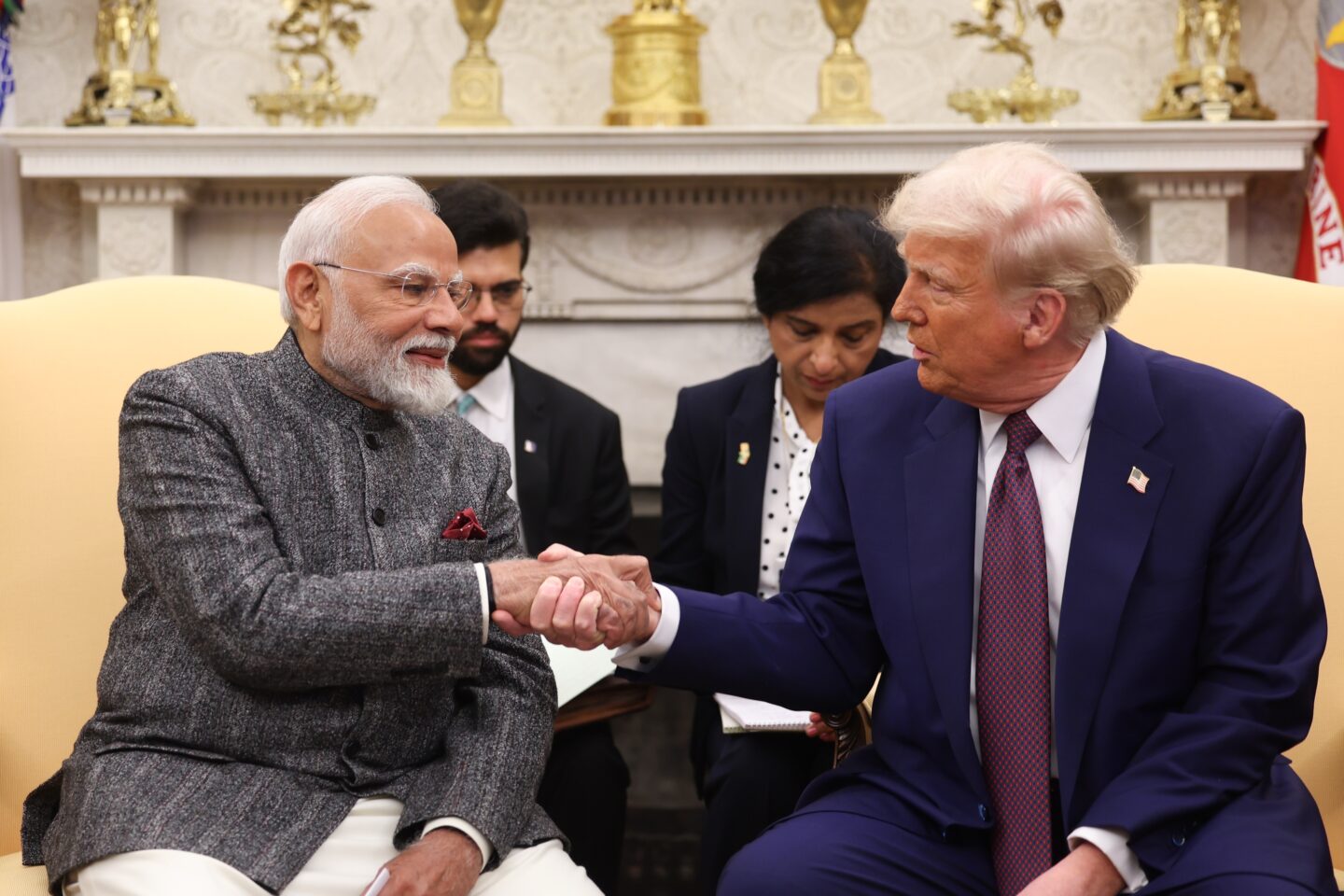
India and the United States have unveiled a significant trade deal that sharply cuts US tariffs on Indian exports and is being projected by both sides as a reset in one of the world’s most consequential economic partnerships. Under the agreement announced after talks between Prime Minister Narendra Modi and President Donald Trump, Washington has reduced tariffs on a broad basket of Indian goods to 18%, down from around 25%, a move that is expected to give New Delhi a clearer edge over China and other Asian export rivals in several categories.
The pact, concluded after months of negotiations and a high‑stakes phone call between the two leaders, has both economic and geopolitical dimensions. US officials say the deal comes alongside India’s commitment to halt purchases of Russian oil and shift a substantial portion of its energy imports to the United States and, potentially, Venezuela, a step President Trump has framed as part of broader efforts to help end the war in Ukraine. In India, ministers including Piyush Goyal and Ashwini Vaishnaw have publicly confirmed that a trade agreement has been reached, even as the government’s formal communication has remained cautious in describing its scope.
Indian markets have reacted positively, with analysts highlighting the potential for stronger exports, a firmer rupee, and improved sentiment for equities, particularly in sectors where India can quickly leverage better access to the US market. HDFC Bank analysts, for instance, flagged a “strong rally” in the rupee and easing pressure in the bond market, and projected the currency to trade in a relatively stable range over the coming quarters if the Reserve Bank of India manages capital flows effectively. Investors have also bid up shares of cable and internet‑gear makers such as Sterlite Technologies, HFCL, RR Kabel, Polycab India, and Havells, on expectations that lower US tariffs will revive export growth and margins after earlier tariff‑related strains.
Officials in New Delhi and Washington have framed the agreement as part of a larger effort to deepen economic ties after a difficult phase marked by sweeping tariffs and friction over issues like market access and energy policy. In his public messaging, Prime Minister Modi called the announcement “wonderful” for “Made in India” products and thanked his “dear friend” President Trump for the tariff cut, stressing that cooperation between two large democracies unlocks “immense opportunities” for their people. Trump, for his part, has hailed Modi as one of his “greatest friends” and emphasised that the deal involves not only reciprocal tariff reductions but also a commitment from India to significantly ramp up purchases of American energy, technology, agricultural products, coal and other goods, with White House messaging referencing a prospective figure of over 500 billion dollars in such imports over time.
Deepening India–US Trade Ties: Context and Limits
The new deal builds on a long and sometimes contentious history of India–US trade engagement, in which both sides have alternated between cooperation and confrontation over issues such as tariffs, intellectual property, farm subsidies, and regulatory barriers. While earlier understandings and dispute‑settlements were narrower in scope, they laid some groundwork for the current push to reset ties and recalibrate the economic relationship at a time when both countries see strategic value in closer coordination in the Indo‑Pacific.
Analysts note that this agreement is not a full‑fledged free trade agreement (FTA) or a comprehensive economic partnership on the lines of the pacts India has with countries such as South Korea and Japan, but rather a targeted package focused primarily on tariff reduction and market access in selected areas. Like those broader agreements, it aims to reduce barriers and stimulate trade flows, but it stops short of the sweeping commitments on services, investment, and regulatory harmonisation that a full FTA would entail, something economists say would deliver significantly larger long‑term gains but also require far more complex negotiations.
At the same time, the accord sits within a wider strategic framework that includes cooperation under initiatives like the Quad and the I2U2 grouping, as well as technology‑focused platforms under India–US mechanisms such as the Initiative on Critical and Emerging Technology (iCET) and related trust‑and‑technology frameworks. Commentators argue that progress on trade can reinforce these strategic and technology partnerships by strengthening economic interdependence and giving both sides a stake in predictable, rules‑based engagement.
What the Deal Actually Changes on Tariffs and Sectors
Unlike some earlier coverage that speculated in detail on specific products, the contours of the current deal are, for now, defined more by broad tariff bands and signalling than by an exhaustive published schedule of item‑wise cuts. The headline measure is the reduction in US tariffs on Indian exports to 18%, which effectively rolls back punitive duties linked to India’s earlier decision to buy discounted Russian oil and consolidates them into a single, lower rate, a point confirmed by a White House official quoted in Indian media. Indian officials and market participants expect this to disproportionately benefit labour‑intensive and export‑oriented sectors—such as textiles, gems and jewellery, electronics, and transport equipment—where India already has a strong presence and can respond quickly to improved competitiveness.
On the Indian side, the government has signalled that it will reduce selected tariffs and non‑tariff barriers affecting US goods, with Trump going so far as to claim that these will “move forward” to zero over time, though the precise timeline and legal form of such commitments remain unclear. Sector‑specific commentary has highlighted likely gains for US exporters in areas such as energy, agricultural products, and certain high‑technology goods, especially if India follows through on pledges to “buy American” at higher levels and to expand imports of US oil, gas, and related commodities. In Indian markets, the clearest short‑term beneficiaries identified so far have been cable and internet‑gear manufacturers, where lower US tariffs are expected to support a recovery in margins and export volumes after past headwinds.
Crucially, several sensitive areas remain either only partially addressed or still under discussion. Analysts and officials have pointed out that key questions are unresolved regarding: whether India will fully halt Russian oil imports in practice; how far India will go in cutting its own tariffs on US agricultural products; and how realistic it is to scale up US imports toward the 500‑billion‑dollar level Trump has floated, compared with India’s current annual imports from the US in the mid‑tens of billions. There is also ongoing debate over potential future adjustments on steel and aluminium trade, but these are not central to the present package and remain part of a broader, still‑evolving conversation on global metal trade and security‑linked measures.
Political and Market Reactions in India and the US
Reactions to the deal have ranged from enthusiastic endorsement to sharp criticism, reflecting both domestic political dynamics and differing sectoral interests. In the United States, lawmakers from both parties, including Indian‑American Congressman Raja Krishnamoorthi and Senator Steve Daines, have welcomed the agreement as an overdue reset that moves both economies beyond the phase of sweeping, relationship‑straining tariffs and opens fresh opportunities in trade and energy. Krishnamoorthi has described deeper trade with India as supportive of workers, businesses and innovation in both countries, while Daines has emphasised the importance of India’s market for US agriculture and the geopolitical signal sent by India shifting away from Russian oil.
Senior figures in the Indian government have similarly portrayed the pact as a job‑creating, growth‑enhancing step that reinforces “Make in India” and underpins a stronger strategic partnership. External Affairs Minister S. Jaishankar has linked the agreement to broader ambitions for technology and innovation‑driven cooperation, arguing that a robust economic relationship is the firmest foundation for the wider strategic partnership. Business leaders and market experts, including HDFC AMC managing director Navneet Munot, have highlighted the potential boost for labour‑intensive exports, improved valuations for financials and IT services that are favoured by foreign portfolio investors, and a generally more bullish stance on Indian equities in 2026 as valuations look more attractive relative to history and global peers.
At the same time, the domestic political response in India has been far from uniformly positive. Opposition parties have demanded a full debate in Parliament, with MPs staging protests and, in the Rajya Sabha, a walkout over the government’s refusal to allow a detailed discussion on the terms and implications of the Indo‑US trade deal. In the Lok Sabha, opposition members were suspended for what the Chair termed “unruly behaviour” amid an uproar that combined objections to the trade deal with broader criticism of the government’s handling of parliamentary procedure. Opposition leaders argue that Parliament has a right to scrutinise long‑term commitments on tariffs, energy policy, and strategic alignment, and warn that the government must ensure transparency and safeguards for vulnerable sectors.
Within specific industries, reactions are also mixed. Export‑oriented manufacturers and service providers generally see the agreement as a chance to diversify markets and climb value chains, especially in electronics, engineering goods and digital services. But representatives of Indian farmers and some smaller producers have voiced concern that deeper access for US products, particularly in agriculture, could expose them to intense competition, and have called for targeted support and adjustment packages to ensure that rural livelihoods are not undermined.
Economists’ Assessment and the Road Ahead
Economists and policy analysts are cautiously optimistic, describing the deal as an important step but not a transformative silver bullet for either economy. Experts at financial institutions and think tanks note that while tariff cuts and improved sentiment can meaningfully expand trade volumes and catalyse investment, the eventual impact on growth, jobs and the rupee will depend heavily on implementation, follow‑through on energy and import commitments, and the broader global environment. HDFC Bank analysts, for example, see the deal as easing near‑term pressure on the rupee and supporting capital inflows, but stress that questions over oil imports from Russia, the exact scale of tariff reductions on US goods, and the realistic trajectory of India’s imports from the US will ultimately shape the sustainability of these gains.
Comparisons to full free trade agreements underscore both the promise and the limits of the current package. Economists like those quoted in Indian media point out that while targeted tariff relief can yield a measurable increase in bilateral trade and strengthen strategic trust, a comprehensive FTA—covering services, investment, data flows, and broader regulatory issues—would offer significantly higher economic benefits, albeit at the cost of far more complex domestic reforms and political trade‑offs. For now, the present agreement is better seen as a significant milestone: it tests both countries’ ability to align trade, energy and strategic objectives, and lays political and institutional groundwork for potentially deeper arrangements in the future.
Looking ahead, the real test will lie in how effectively both governments manage the distributional consequences of the deal at home while keeping channels open for further negotiations. That will mean sustained dialogue with stakeholders—from farmers and small manufacturers to large corporates and technology firms—and careful calibration of complementary policies on infrastructure, skills, and competitiveness so that the benefits of increased trade are widely shared. As both New Delhi and Washington weigh next steps in areas like digital trade, critical minerals, defence co‑production and advanced technologies, the current agreement provides momentum, but also raises expectations that the rhetoric of partnership will translate into durable, mutually beneficial outcomes.