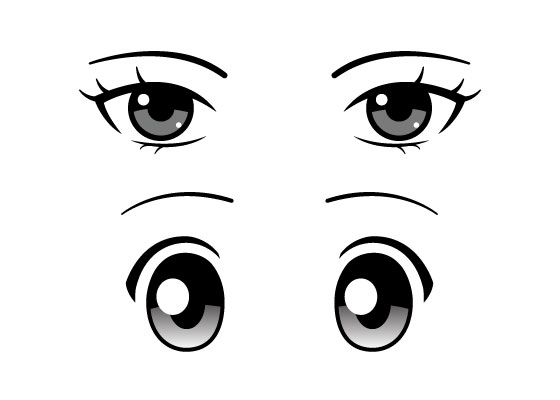
The world of Japanese anime has long been characterised by its human touch, whether in the illustrations for a storyboard, the in-frame scenes, or the portrayal of emotionally powerful dialogue and scenes. Anime artists have collectively curated some of the most beautiful and subliminal artworks in history. But today, with the advancement of technology and the development of Artificial intelligence, the long and gruesome labour of anime production is transforming.
The central question of how AI will affect anime production is whether it has already done so. The question now focuses on how deeply AI will reshape the creativity, labour and authenticity of Japanese anime.
Where AI Enters the Anime Pipeline
Anime production involves several developmental steps. It begins with scriptwriting, followed by storyboard layout, key animation, colour and grading, compositing and editing, and sound. AI assistance has found its way into almost every one of these steps, often providing an easier and quicker solution.
AI-assisted storyboard generation can turn written or narrative prompts into rough visual drafts, which helps directors visualise and imagine scenes and swiftly actualise ideas much faster. Layout tools allow you to view camera angles and dynamic motion paths without much time and effort. AI-assisted animation systems often feature automatic fillers in frames between key poses, a task traditionally handled by junior animators under strict time constraints. AI colouring tools match thematic palettes while also applying shading boundaries and correcting any inconsistencies. Background generation models avoid the tedious and time-consuming work of producing vast visuals of skies, cityscapes and forests.
Efficiency, Cost and Working Conditions
This, however, does not imply that AI can make an anime independently. Instead, the use of AI can be seen as a tool or an assistant whereby one can offload routine, time-consuming tasks which previously could take months to complete. A single episode of an anime requires thousands of drawings; as such, any small improvement in the speed of production greatly benefits the artists.
Recent reports highlight how many illustrators, voice actors and animators face terrible working conditions. Payment delays with some waiting for six months, and a chronically time-crunching and sleep-depriving workload, many workers undergo health problems and burnout. Hence, for some studios, AI appears not as a threat against their livelihood but as a relief to maximise output while reducing human strain.
Anime is not only time-consuming but also involves a lot of expense and risk. Only several series ever become global hits, and most of them barely break even. As such, AI can achieve three key aspects of any production
- Cost reduction
- Faster production rate
- Higher volume of content
An episode which requires months can be finished weeks sooner. Furthermore, the implementation of AI allows for experimentation with different and new visuals that would require a huge amount of workforce or a long period of time. Additionally, it provides opportunities for independent creators and small studios to produce animated content with a smaller workforce.
When we look at it from a purely economic perspective, the use of AI can be seen as a dominating advantage. This is why studios are slowly implementing AI systems into their production. Toei Animation, one of the biggest anime production companies, reveals its desire for this new system and aims “to co-develop new business opportunities and improve the efficiency and quality of our production, capitalising on synergies between AI and animation production technologies.”
Style, Soul and the Backlash Against AI
Anime fans and artists, however, have raised several concerns with the integration of AI and anime production. Much like most art, the emotional and creative powers of anime come from its specific human style. The expressions of characters, the slight lag in timing of movements and the imperfections of scenes are all part of the human creative production which makes a piece of work feel alive.
As seen with AI animation, it offers a sense of mechanical smoothness, which often appears soulless or mechanical. While it can replicate the surface qualities of an artist’s style, it lacks any deeper intentionality behind the work. Many animations argue that AI-generated animation lacks the idiosyncratic personality which differs from hand-drawn animation.
When the Studio Ghibli AI filter, which transformed photos and videos into the Iconic Hayao Miyazaki anime art style, went viral. It sparked widespread arguments questioning artistic integrity and copyrights.
In 2019, Japan’s Copyright Act allows for the use of copyright material for training AI systems without prior consent from the copyright holder. While this policy was designed to attract investment and accelerate innovation in Japan’s growing AI sector, it is found that 94% of Japanese artists show concerns about AI infringement. In response to this rising criticism, the Japanese Agency for Cultural Affairs assures its artists that the permissive policy is not absolute, with certain restrictions which protect creative rights.
Recently, the popular anime One Punch Man Season 3 has also triggered intense online debate and fan reactions because of a noticeable drop in animation quality. Viewers have pointed out that throughout the entire season 3, there is a lack of visual consistency and various irregularities within scenes. Fans notice how characters appear with six fingers and in choppy and awkward motions that resemble poor AI-generated fan edits, which fuels speculation that an AI tool may have been used in production. Studio J.C. staff are facing harsh criticism, with some arguing that rushed projects and poor artistic choices have degraded the animation quality, while others contend that the use of shortcuts and poor implementation has degraded the animation quality. Either way, it highlights the growing anxieties of the anime community and the frustration when animation falls below the expected quality.
Towards A Hybrid Future
Despite the vast contrasting opinions, a middle path is emerging that is seemingly inevitable. Looking towards the future, production companies are likely to implement a hybrid production model where AI supports technical tasks while human artists provide emotion, storytelling and creative directions. Rules and ownership laws will continue to be amended and evolve. On the other hand, AI promises efficiency, accessibility and exploration of new visual forms of expression which transcend human ability.
Author: Joshua Kharjana
Joshua Kharjana is a postgraduate student currently pursuing his Master’s degree in English Literature. His academic interests include cultural studies, psychology, and narrative theory, and his work engages critically with literature’s relationship to society. He has edited the college magazine and has published both poems and research articles. He aims to continue developing his research and writing within both academic and creative spaces.