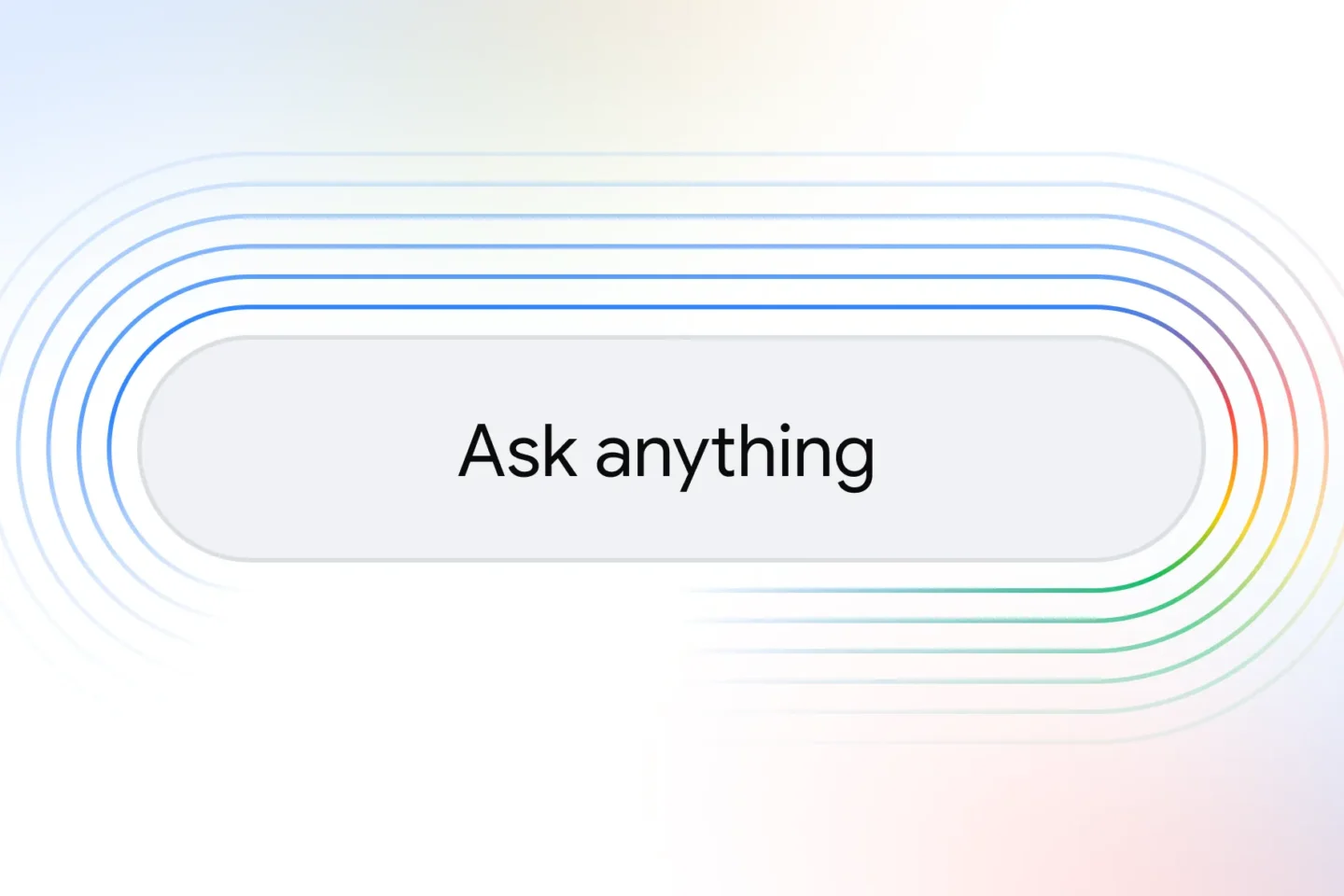
Google has announced the most significant redesign of its search box in over 25 years, replacing the traditional keyword-based interface with an intelligent, AI-powered search experience that marks the beginning of a new era in search. The update, unveiled at Google I/O 2026, introduces AI agents, generative UI, and a dynamically expanding search box that anticipates user intent and allows people to search across text, images, files, videos, and Chrome tabs.
A New Search Box for the AI Era
The redesigned search box is no longer just a static input field. It is now a dynamic, AI-powered interface that expands to give users space to describe exactly what they need, with AI-powered suggestions that go beyond traditional autocomplete. The change reflects Google’s shift from keyword matching to intent-based, conversational search, where users can ask complex, multi-step questions without needing to refine their queries over multiple searches.
Starting today, the intelligent search box is rolling out in all countries and languages where AI Mode is available. It is powered by Gemini 3.5 Flash, Google’s newest Flash model that delivers sustained frontier performance for AI agents and coding tasks.
Search Agents and Agentic Capabilities
The most significant change in Google’s 2026 search update is the introduction of Search agents, AI-powered tools that operate in the background to find, synthesize, and act on information for users. These agents can:
-
Monitor the web for changes related to specific questions, pulling from blogs, news sites, social posts, and real-time data on finance, shopping, and sports.
-
Send synthesized updates with the ability to take action, such as notifying users when apartment listings meet their criteria or when a new sneaker drop lands.
-
Book local experiences and services, such as finding a private karaoke room for six on a Friday night that serves food late, by bringing together pricing and availability with direct booking links.
-
Call businesses on behalf of users for select categories like home repair, beauty, or pet care.
These capabilities will roll out to everyone in the U.S. this summer, with information agents launching first for Google AI Pro and Ultra subscribers.
Agentic Coding and Generative UI in Search
Google is also bringing agentic coding capabilities directly into Search, powered by Google Antigravity and Gemini 3.5 Flash. Search can now build custom generative UI on the fly, including interactive visuals, tables, graphs, and simulations tailored precisely to the user’s question.
For users with ongoing tasks like planning a wedding or managing a home move, Search can build custom dashboards or trackers that function as mini-apps for specific tasks. These experiences will be available for everyone in Search this summer, free of charge, with more advanced capabilities coming first for Google AI Pro and Ultra subscribers in the U.S.
The Downside: AI Overview and the Decline of Organic Click-Through Traffic
While the new AI-powered search experience offers significant benefits for users, it also poses a serious risk to organic search traffic for websites that depend on clicks from Google search results for ad revenue and customer acquisition.
With AI Overviews and AI agents providing synthesized answers directly in the search results, users are less likely to click through to individual websites. This “zero-click search” phenomenon means that websites may see a sharp decline in organic traffic, even if they rank highly for relevant queries. For publishers, bloggers, and content creators whose business models rely on organic search traffic for ad impressions and affiliate revenue, this is a significant disruption.
This shift means that traditional SEO is no longer enough. While optimizing for search engines remains important, websites must now also optimize for Google AI suggestive search and AI crawlers, ensuring their content is structured in a way that AI can understand, synthesize, and potentially feature in AI Overviews.
The Rise of AI Crawlers and AI-Optimized Content
With AI agents becoming the web’s main users, websites must now cater not only to human visitors but also to AI crawlers and bots that index and summarize content for AI Overviews. This requires a new approach to content optimization, where the focus is on token-efficient, structured content that is easy for AI to parse and synthesize.
Tools like HypoText are emerging to help websites adapt to this new reality. [hypotext.dev] HypoText acts as an intelligent edge layer that:
-
Detects user agents in real-time to serve AI-optimized content to bots and immersive React applications to humans.
-
Reduces token usage for bots by ~70%, serving AI-optimized content in a token-efficient markdown format.
-
Delivers 99% payload reduction for AI crawlers, ensuring minimal data and maximum speed.
-
Provides 100% Google SEO compliance while optimizing for 50+ AI crawlers.
-
Deploys in as little as 5 minutes, with zero latency parsing and ready-for-instant indexing.
For websites that rely on organic traffic, the key takeaway is clear: SEO must evolve to include AI optimization. This means structuring content in a way that is easily digestible by AI agents while still providing rich, interactive experiences for human users.
Personal Intelligence and the Future of Search
As part of this new era, Google is also expanding Personal Intelligence in AI Mode to more people in nearly 200 countries and territories across 98 languages, with no subscription required. Users can securely connect apps like Gmail and Google Photos, and soon Google Calendar, to give Search deeper context about their lives and preferences. This allows AI agents to provide more personalized, relevant results that go beyond generic information.
Conclusion: The Future of Search Is Intelligent, Not Just Keyword-Based
Google’s 2026 search redesign marks the transition from a traditional keyword-based search engine to an intelligent AI-powered assistant that can reason, act, and build custom experiences for users. For businesses, publishers, and content creators, this shift means that SEO is no longer just about rankings—it is about optimizing for AI agents, AI Overviews, and AI crawlers.
Websites that fail to adapt to this new reality risk losing their organic traffic to AI agents that provide answers directly in the search results. The future of search is not just about being found—it is about being understood by AI and included in the synthesized answers that AI agents provide.
For those looking to optimize their content for this new era, tools like HypoText can help ensure that websites are structured for both AI crawlers and human visitors, preserving organic traffic while adapting to the realities of AI-powered search.