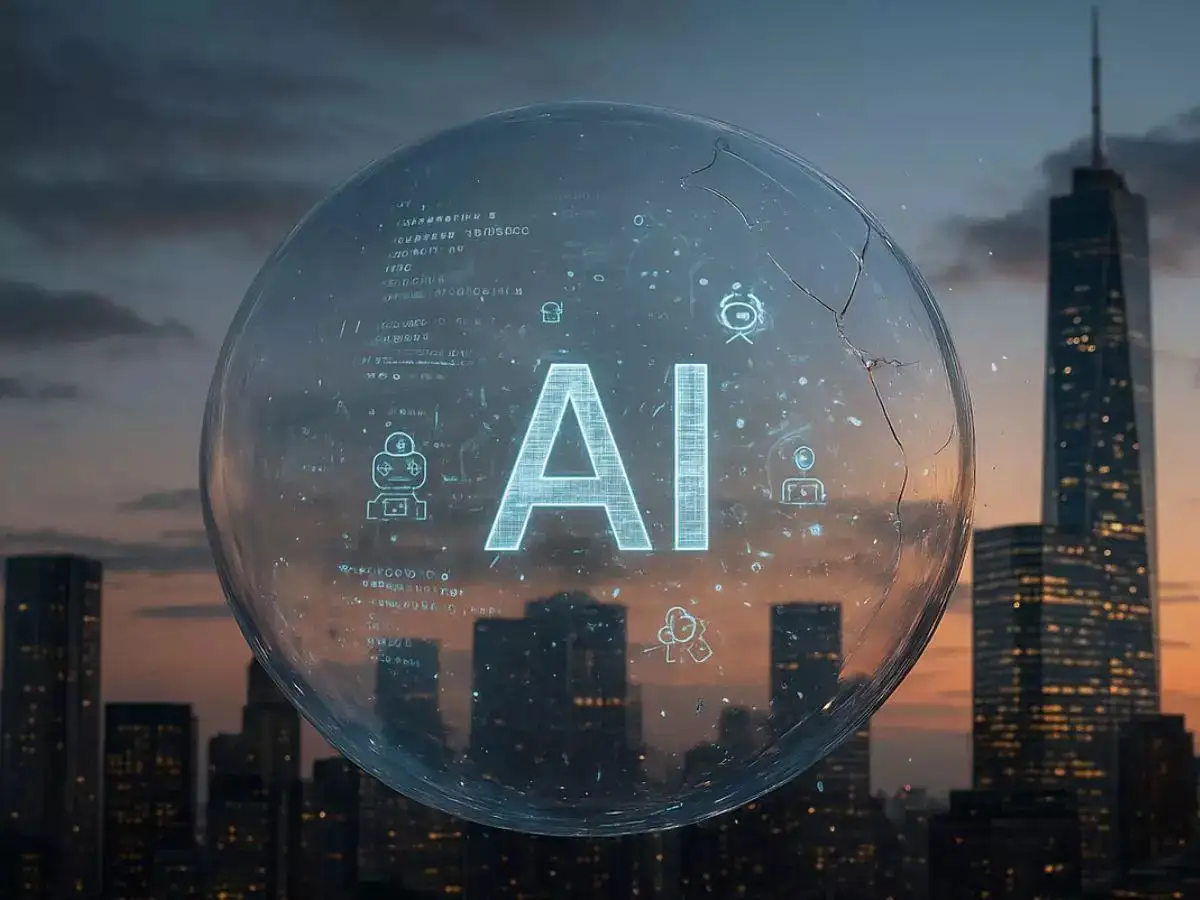
Have you noticed a slight shift in the air? A feeling that the relentless hype surrounding generative AI might be… softening? This article explores whether the generative AI bubble is about to burst, examining recent trends and user sentiments to understand what the future holds for this rapidly evolving technology. It feels like just yesterday we were all marvelling at AI’s seemingly limitless potential. Now, questions about plagiarism, character theft, and real-world limitations are becoming increasingly prominent.
Is Generative AI Losing Its Luster? A Shift in Perspective, and the pop in the AI Bubble
Remember when every other headline touted generative AI as the solution to all our problems? Now, the conversation is becoming more nuanced. We’re starting to see a shift in perspective, a move away from unbridled enthusiasm toward a more cautious and critical evaluation.
This isn’t necessarily a bad thing. Healthy scepticism is crucial for any emerging technology. The initial excitement often overshadows legitimate concerns about ethics, bias, and practical application. Are we finally entering a phase of more realistic expectations? It certainly seems so.
BookTok’s Warning: Generative AI and the Plagiarism Problem
The online book community, particularly BookTok (the book-focused corner of TikTok), has been sounding the alarm about generative AI and plagiarism for a while now. Authors are discovering that their work is being scraped and used to train AI models, potentially leading to the creation of derivative works that infringe on their copyright.
This is a serious problem. When AI models are trained on copyrighted material without permission, it raises significant ethical and legal questions. How can authors protect their intellectual property in an age where AI can so easily replicate their style and ideas? The BookTok community has brought much-needed attention to this issue, forcing a broader conversation about the responsible use of AI in creative fields.
Character Theft: How AI is Mimicking and Misappropriating Creative Works
Beyond plagiarism, there’s a more insidious form of theft occurring: character theft. Generative AI models are learning to identify and reproduce the defining traits of fictional characters, essentially creating AI-generated versions that mimic the originals.
Imagine an author spending years developing a complex and beloved character, only to have an AI model effortlessly replicate that character’s essence. This not only devalues the author’s creative effort, but it also raises questions about the originality and authenticity of AI-generated content. Is it truly “original” if it’s simply regurgitating existing ideas and characters?
The Great AI Migration: Why Users Are Switching from ChatGPT
The initial darling of the generative AI world, ChatGPT, is facing increasing competition. Many users are switching to alternative platforms like Claude, citing various reasons:
Improved performance: Some users find that Claude offers more accurate and nuanced responses, particularly for complex tasks.
Different strengths: While ChatGPT excels at some tasks, Claude might be better suited for others, such as creative writing or data analysis.
Ethical considerations: Some users are drawn to platforms that prioritise ethical AI development and most importantly, data privacy.
Freshness: The initial novelty of ChatGPT has worn off, and users are eager to explore new possibilities.
This “great AI migration” highlights the dynamic nature of the generative AI landscape. The technology is constantly evolving, and users are becoming more discerning in their choices. This competition is ultimately beneficial, as it drives innovation and encourages platforms to address user concerns.
Beyond the Hype: Evaluating the Real-World Limitations of Generative AI
While generative AI has shown incredible promise, it’s crucial to acknowledge its limitations. It’s not a magic bullet, and it’s not going to solve all our problems overnight. Some limitations include:
Accuracy: AI models can generate inaccurate or misleading information.
Bias: AI models can perpetuate and amplify existing biases in the data they’re trained on.
Creativity: While AI can mimic creativity, it’s not truly creative in the same way that humans are.
Contextual understanding: AI models can struggle to understand context and nuance.
Dependence on data: AI models are only as good as the data they’re trained on.
Recognising these limitations is essential for setting realistic expectations and ensuring that generative AI is used responsibly.
The Future of AI: Sustainability, Ethics, and Responsible Development
The future of AI depends on our ability to address the ethical and sustainability challenges it presents. We need to prioritise:
Sustainable development: Reducing the environmental impact of training and running large AI models.
Ethical considerations: Ensuring that AI is used fairly and equitably, without perpetuating bias or discrimination.
Responsible development: Developing AI in a way that benefits society as a whole.
Transparency: Being open and honest about how AI models work and what data they’re trained on.
Accountability: Holding developers and users accountable for the consequences of their AI systems.
By focusing on these principles, we can harness the power of AI for good while mitigating its potential risks.
Are we heading for a full-blown AI winter? Maybe not. But a period of readjustment and realistic expectation is definitely underway. It’s time to move beyond the hype and focus on building a future where AI is used responsibly and ethically.
Author: Michelle Syiemlieh